Kaolin or « Kalaba »: good or bad for your health?
- Posted on 26/05/2023 14:45
- Film
- By abelozih@sante-education.tg
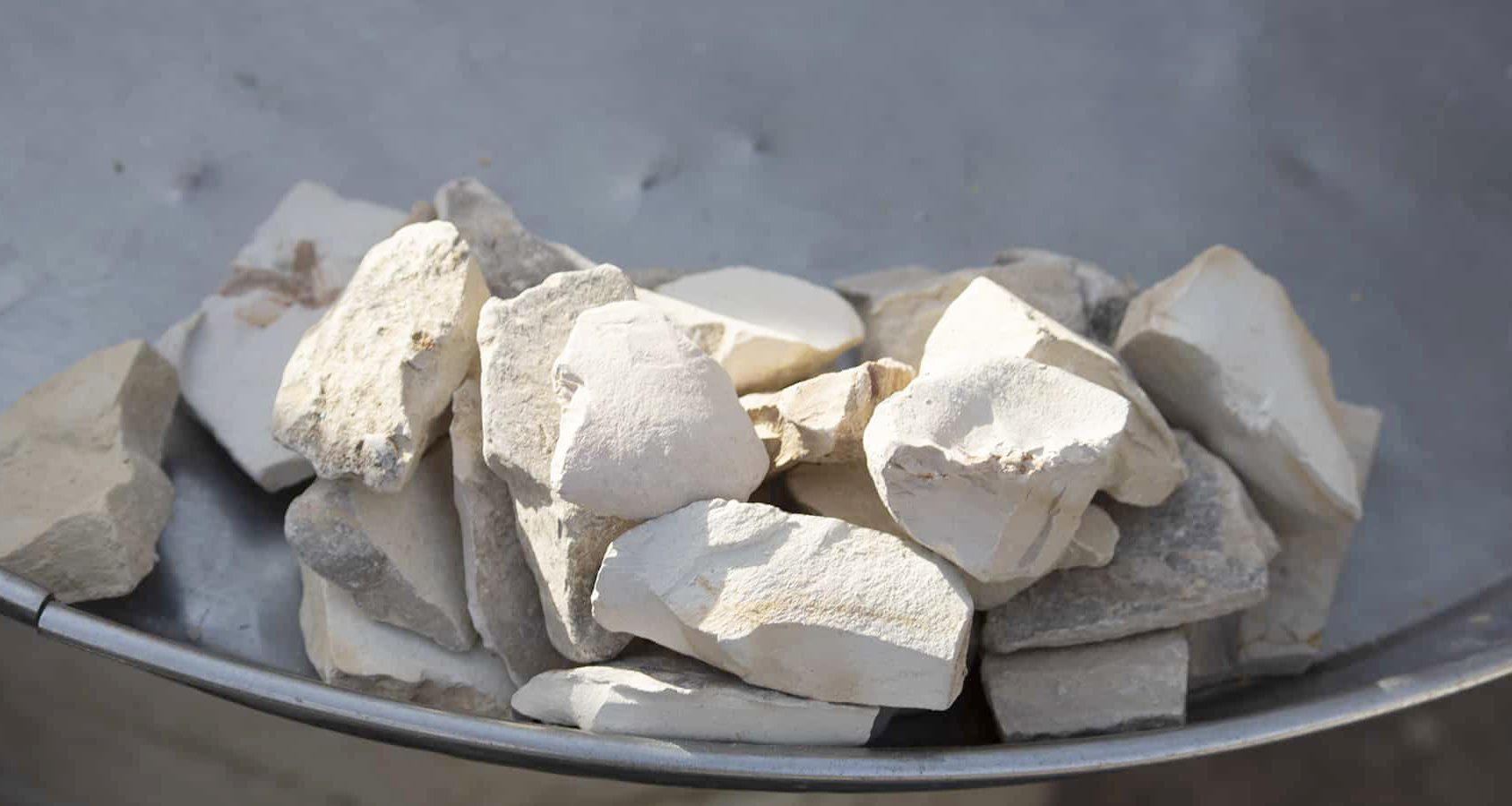
Extract from the article: White, crumbly clay, called « kew » by the Senegalese, « iokpo » by the Ivorians, « kalaba » by the Togolese and « mabele » by the Congolese, is highly prized by women and young people. They eat it as they please. But this calcareous rock, which is a
White,
crumbly clay, called « kew » by the Senegalese, « iokpo »
by the Ivorians, « kalaba » by the Togolese and « mabele »
by the Congolese, is highly prized by women and young people. They eat it as
they please. But this calcareous rock, which is also used as a beauty product
for the skin, presents health hazards when ingested.
Kaolin
is a white clay composed of kaolinite and aluminum silicate. Eating clay is a
type of geophagy, a pathological disorder involving the eating of earth. This
practice is widespread in Africa. According to consumers, kaolin has physical
and therapeutic virtues. « Clay has a preventive or curative action, to
soothe and support the digestive system. It combats gastric acidity, pain and inflammation
of the gastrointestinal sphere, bloating, flatulence and diarrhea »,
explains naturopath Amélie Mounier in an article dedicated to the benefits of
clay on the "Journal Santé des femmes" media.
But
« it absorbs everything in its path and neutralizes the active
principles of what we ingest at the same time, which is why it's imperative to
space out doses by at least 3 hours », she adds.
Kaolin:
a health hazard
Kaolin
reduces iron absorption, leading to deficiencies and anaemia. For this reason,
it is not recommended for pregnant and breast-feeding women. Consuming kaolin
exposes you to the risk of ingesting heavy metals, as this clay is extracted
from the soil. In 2019, France's Agence nationale de sécurité du médicament et
des produits de santé (ANSM) recommended that clay-based medicines no longer be
prescribed to children under 2 years of age « due to the possible
presence of minute quantities of lead, even if the treatment is of short
duration ».
Risk
of addiction
Eating
kaolin can be addictive. « For female consumers, since they're usually
women, they say they use it to manage stress, to calm stomach upsets, for
nausea, vomiting, especially in pregnant women, sometimes just for pleasure or
as an appetite suppressant », explains Dr Stanislas Agbo, a general
practitioner in Lomé.
Consumption
of kaolin does far more harm than good. Excessive consumption is dangerous to
health, both physically and mentally. It can lead to dependency. « When
you take too much, it can cause real blockages in the digestive system, leading
to occlusive and sub-occlusive syndromes, and finally, when it lines the entire
wall of the digestive tract, you can have relatively profound anemia », concludes
Olivier Spatzierer, Gastroenterologist at the American Hospital in Paris.
For
psychiatrist Aïda Sylla, based at the Thiaroye hospital in Senegal, the main
reason women use kaolin is to « relieve their boredom ». Many of them
start using it during pregnancy. « The stone, which has no flavor,
gives a pregnant woman, whose taste is perverted, a sought-after sensation of
sand in the mouth», continues Aïda Sylla. « In others, there may be
a kind of childhood mimicry. As with any compulsive eating behavior, kaolin
acts like a drug, from a psychological point of view».
This
is one of the effects of Pica syndrome, a behavioral disorder that induces the
consumption of non-nutritive substances such as earth, paper or clay. This
syndrome, the genesis of which combines nutritional and emotional deficiencies,
has been particularly prevalent in West Africa for centuries. So kaolin is
considered an appetite suppressant for some, a medicine or a pleasure for
others.
Raymond
DZAKPATA