Fight against HIV/AIDS: between progress and concerns
- Posted on 04/12/2025 14:26
- Film
- By abelozih@sante-education.tg
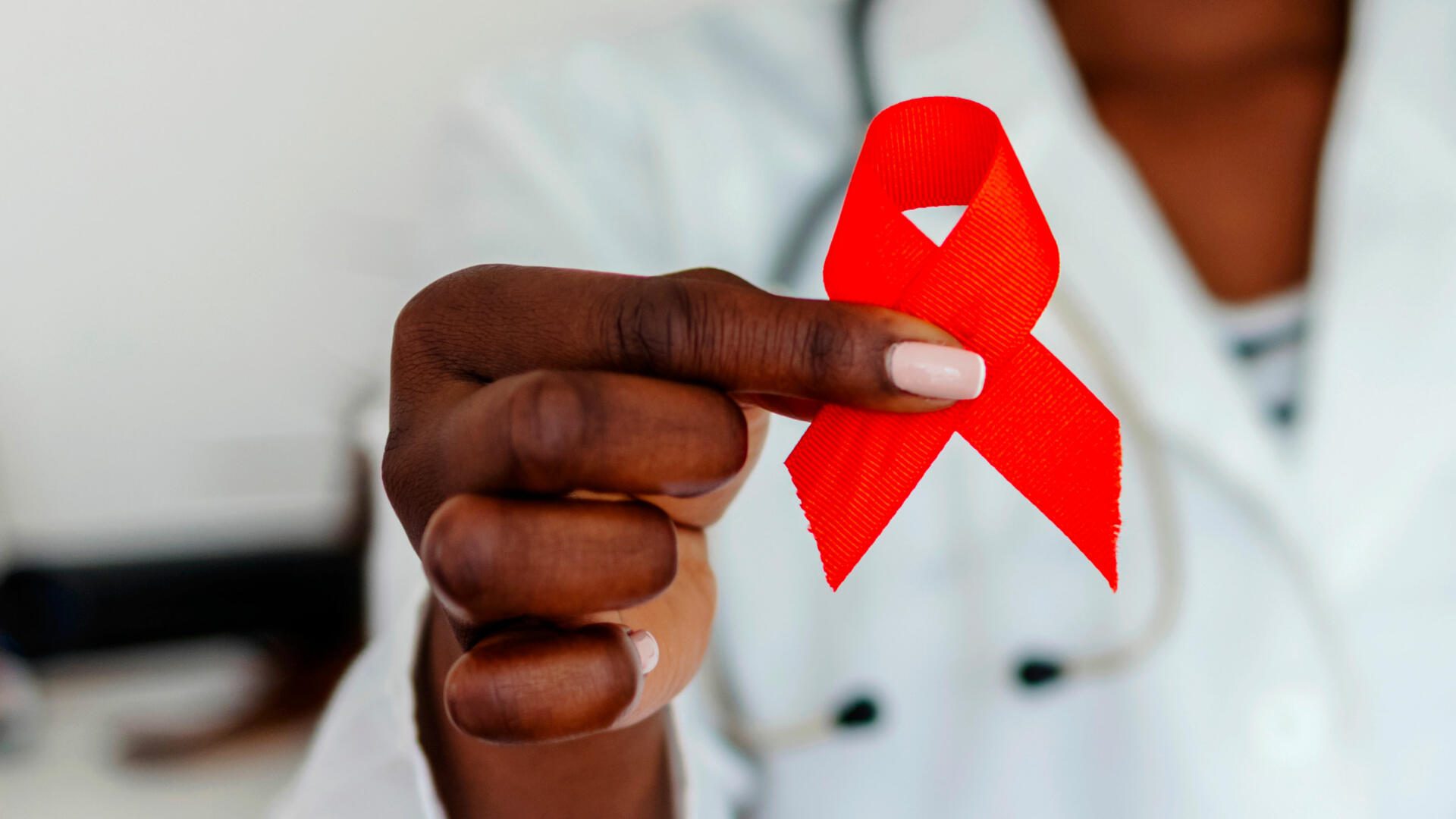
Extract from the article: The fight against HIV is in a paradoxical situation. Despite real scientific advances, the latest UNAIDS report delivers an alarming finding: the global response is fragile, caught in a spiral of declining funding and health services shortages.
The
fight against HIV is in a paradoxical situation. Despite real scientific
advances, the latest UNAIDS report delivers an alarming finding: the global
response is fragile, caught in a spiral of declining funding and health
services shortages.
According
to UNAIDS Director Winnie Byanyima, "the global response to HIV has seen
its biggest setback in decades." In 13 countries, the number of people
newly placed on treatment has decreased. Supply shortages are reported in
Ethiopia and the Democratic Republic of the Congo, affecting both testing and
access to antiretroviral treatment. In Nigeria, condom distribution dropped by
55%. Community-based organizations, which have hitherto been at the heart of the
response, are being hit hard: more than 60% of those led by women have had to
suspend essential programmes.
In
Togo, according to published statistics, 594,329 people were screened in 2024,
and more than 16 million condoms were distributed. New infections fell from
6,300 in 2010 to 2,100 in 2024, a 68% decrease across all ages. AIDS-related
deaths also fell by 68% over the same period, reaching 1,800 deaths in 2024,
with a 69% decrease among children aged 0 to 14. In the field of prevention of
mother-to-child transmission (PMTCT), the transmission rate remains at 13%,
still far from the national target set at 5%.
Globally,
nearly 40.8 million people are living with HIV today. Last year, 1.3 million
new infections were recorded. And 9.2 million of these people still do not have
access to ARV treatment. "HIV is not over," insists Winnie Byanyima,
who makes an urgent appeal for international mobilization just a few days after
a terrible disappointment. The Global Fund to Fight AIDS, Malaria and Tuberculosis
has raised just over $11 billion for the next three years, when it estimated
that it would need $18 billion. This replenishment is even lower than that of
2022, thus threatening the sustainability of many programs around the world.
Some advances in the labs
Yet,
in laboratories and research centers, the fight against the virus is not
stagnating. Yazdan Yazdanpanah, Director of the National Agency for Research on
AIDS and Emerging Diseases (ANRS-MIE), sees a paradoxical situation, a
"double dynamic" with, on one hand, significant therapeutic advances;
on the other, a weakening of the capacity to deploy them.
Long-acting
antiretroviral treatments are now available. Rather than living with the daily
intake of a tablet, patients can space the doses: "you can do it every two
months," explains Yazdan Yazdanpanah, which improves the acceptance of the
treatment. "43% of people living with HIV prioritize these long-term
treatments among their first choices, even before criteria such as side effects
or tablet size."
Generics of affordable HIV preventive
treatment as early as 2027 in about 100 countries
Another
major innovation: injectable PrEP, in prevention. Lenacapavir, recently
recommended by the WHO, offers semi-annual protection against infection.
"It’s an injection every six months to prevent HIV," says Yazdan
Yazdanpanah. Thanks to an international agreement, the cost could be around 40
dollars per year in 120 countries with limited resources, whereas the drug was
previously sold for about 30,000 dollars per year in the United States.
But
these advances may remain theoretical if health systems do not follow. In 2025,
global development aid for health decreased by 22%, marked by the decrease or
halt of American programs.
"The
problem is the brutality that goes with it. We must fight against it. But at
the same time, this reliance on the US, in terms of HIV research and
intervention, is not normal either. There is a problem with our ecosystem and
we need to think about it." , says Yazdan Yazdanpanah.
Sub-Saharan
Africa illustrates this dilemma. The continent concentrates a large part of new
infections and 60% of HIV patients live there. In several areas, closures of
community centers are increasing, while the distribution of condoms or access
to screening is declining. The funding crisis, combined with the aftermath of
the Covid-19 pandemic, is weakening, or even jeopardizing, the progress made
since the early 2000s
UNAIDS
is clear: "Science alone will not suffice." The UN agency thus calls
for a rethink of the international financing model, and for the countries most
affected to devote their own resources to it. Without this, instead of ending
the HIV/AIDS epidemic in 2030 as it has committed to, the international
community can only contain it at best. Worse, if financial trajectories remain
at their current dynamics, UNAIDS anticipates a return to the rise of HIV/AIDS
by 2030.
Jean ELI (Source: RFI)