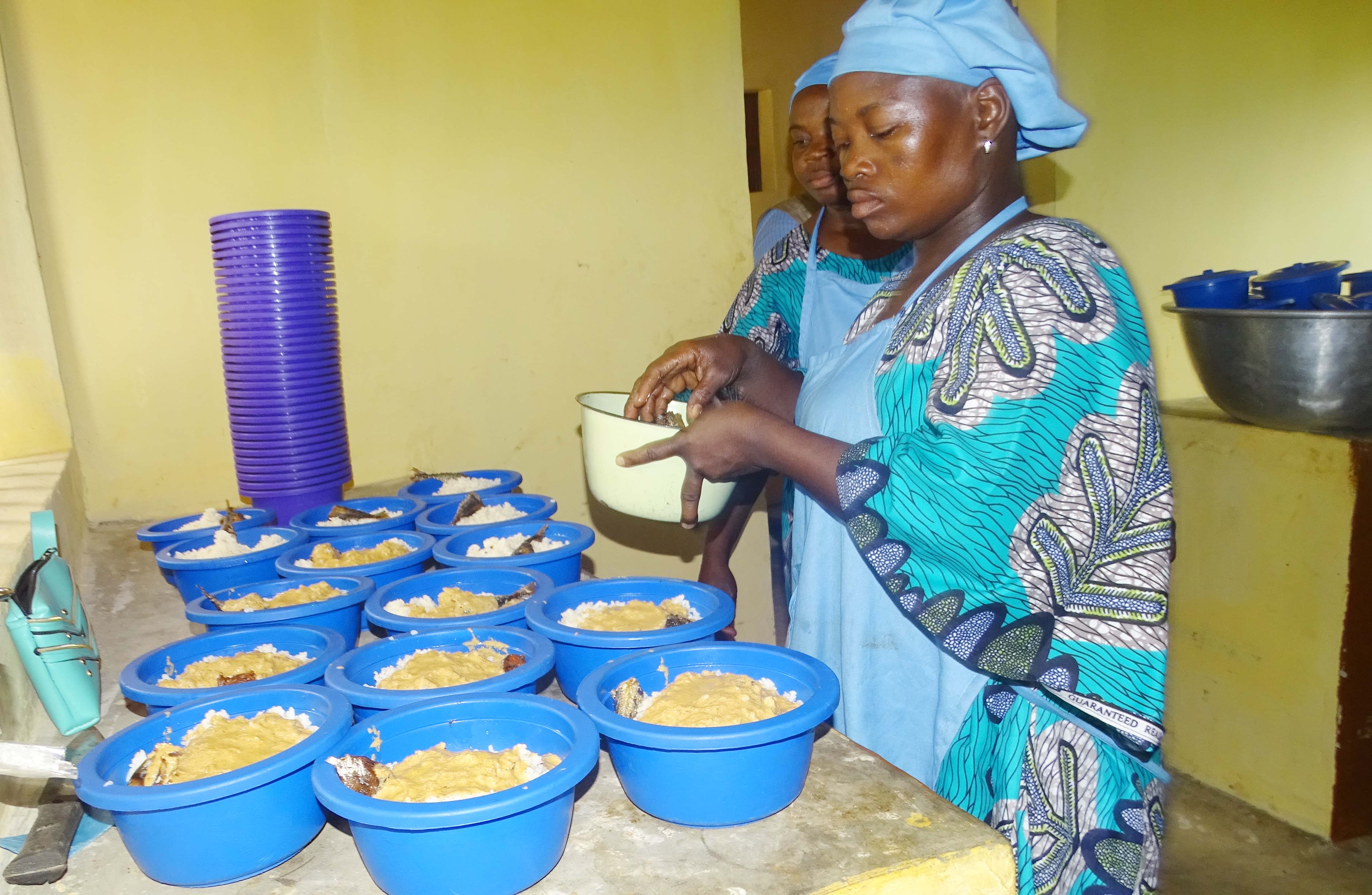
The sportsman's plate: nutrition tips
- Posted on 18/09/2024 15:50
- Film
- By abelozih@sante-education.tg

Extract from the article: In addition to covering their basic nutritional needs, athletes must pay particular attention to their carbohydrate intake before, during and after a sporting event, while optimizing their protein intake.
In
addition to covering their basic nutritional needs, athletes must pay
particular attention to their carbohydrate intake before, during and after a
sporting event, while optimizing their protein intake.
When
we talk about sports nutrition, we're talking about covering energy and
nutritional requirements, including macronutrients (carbohydrates, proteins)
and micronutrients. These are higher than those of the general population, due
to the high energy expenditure of athletes.
Contributions
to specific carbohydrates
Carbohydrate
intake is the first specificity of sports nutrition. Dependence on glucose as
an energy source (stored as glycogen) increases with exercise intensity. The
use of fatty acids (fat) as energy fuel is rendered impossible by this
phenomenon. However, a trained person will be able to use more fatty acids for
a specific intensity.
What's
more, the amount of glucose available in the body is limited: around 120 g of
glycogen in the liver and 254 to 400 g in the muscles of highly trained
athletes. Given the limited amount of energy available for intense exercise,
it's vital to start training sessions or competitions with maximum glycogen
reserves. Today, it is recommended to consume between 10 and 12 g of
carbohydrates per kg of body weight in the two days leading up to the event.
Maintaining
reserves until the start of the race
Between
the last meal, which should be taken around 3 hours before the start of an
event, and the start, it is necessary to maintain glycogen reserves. This
“waiting ration” is made up of small quantities of low-glycemic index
carbohydrates.
Carbohydrate
intake throughout the eventCarbohydrates must be available throughout the
event, to maintain energy levels and avoid depletion of glycogen reserves.
Carbohydrates must be supplied continuously, particularly when the day's
duration exceeds 60 to 90 minutes. Below this level, reserves are adequate to
cope with the effort involved. We recommend consuming around 30g of
carbohydrates per hour for exercise lasting between 1 and 2 hours.When exercise
is prolonged, carbohydrate intake needs to be adjusted accordingly.Very long
exercise sessions are a special case. The intestine's capacity to absorb more
than 1 to 1.2 g of glucose per minute is effectively limited.A trick has been
discovered: athletes then consume another carbohydrate: fructose. When glucose
and fructose are combined, the total amount of absorbable carbohydrates
available to the body is increased. It is therefore advisable to ingest 90 to
100 g of carbohydrates per hour for exercise exceeding 2h30. These
carbohydrates are made up of glucose and fructose. There are even “digestive
tract training techniques” for increasing carbohydrate intake up to 100-120 g
per hour in certain extreme endurance sports.
Proteins
for post-exercise muscle rebuilding
Another
particularity of sports nutrition concerns protein intake. Muscle is constantly
being built and destroyed, much like bone. During exercise, muscle protein
destruction increases, while protein synthesis decreases, which can lead to
muscle loss. Conversely, as soon as exercise ends, protein synthesis increases
considerably for around 3 hours. During this “anabolic window”, the body needs
to be supplied with amino acids (protein building blocks) to rebuild the
proteins degraded during exercise. So, to “limit the damage”, we recommend
ingesting proteins ideally within 30 minutes of exercise. These proteins should
be rich in essential amino acids, in particular leucine, dairy proteins, in
particular whey proteins, rich in leucine, and fast-acting proteins (whose
amino acids are rapidly available). The optimal amount of protein is 0.35 g/kg
body weight.
More
carbohydrates in the recovery phase!
It's
important that the recovery ration also includes carbohydrates.Since muscle
glycogen must be replenished, it is also necessary to provide the energy needed
for protein synthesis, in particular by using high-glycemic index
carbohydrates. We recommend one proportion of carbohydrate to one proportion of
protein for strength/power sports, and three proportions of carbohydrate to one
proportion of protein for endurance sports.Jean ELI
Source:
Pr Xavier Bigard, Sports Physician, Exercise Physiologist, Nutritionist and
Scientific Advisor to the French Anti-Doping Agency, Paris (France)