World Health Day / The ‘One Health’ approach: educating the public
- Posted on 07/04/2026 09:28
- Film
- By raymonddzakpata@sante-education.tg
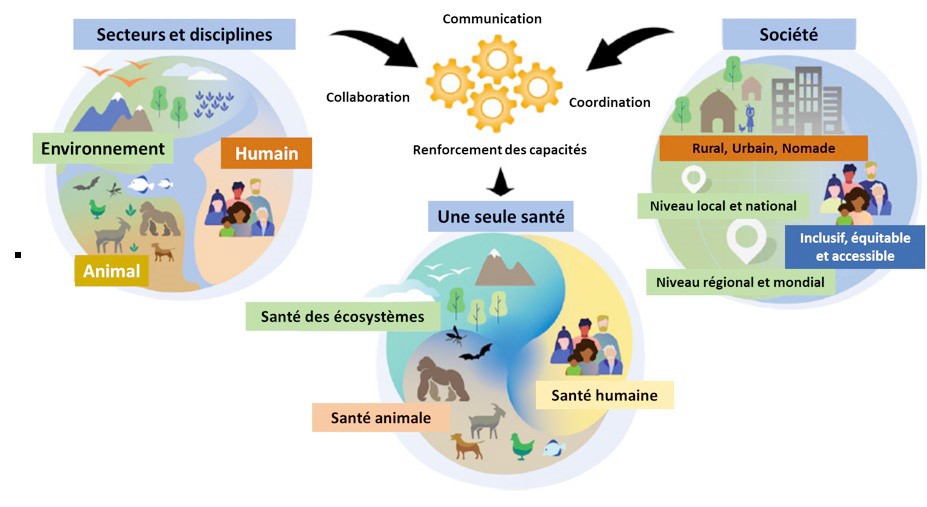
Extract from the article: World Health Day 2026, celebrated every 7 April, focuses this year on ‘One Health’. This year’s theme, ‘Unite for Health. Support Science’, aims to promote international scientific cooperation, highlight the importance of scientific data in health...
World
Health Day 2026, celebrated every 7 April, focuses this year on ‘One Health’.
This year’s theme, ‘Unite for Health. Support Science’, aims to promote
international scientific cooperation, highlight the importance of scientific
data in health decisions and strengthen the ‘One Health’ approach. Thus, health
is no longer limited to humans. Today, scientists and international
institutions recognise a close link between human health, animal health and the
health of ecosystems.
The
‘One Health’ approach is based on a simple idea: human health depends on the
health of animals and the environment.
According
to the World Health Organisation, this approach aims to better understand and
manage the interactions between humans, domestic and wild animals, and
ecosystems.
These
interactions are constant. For example, zoonoses – diseases transmitted from
animals to humans, such as Ebola or COVID-19 – air or water pollution that
directly affects human health, and the use of antibiotics in livestock farming,
which promotes antimicrobial resistance. Thus, no aspect of health can be
considered in isolation.
Zoonoses
According
to data from the WHO and international partners, nearly 60% of human infectious
diseases are of animal origin, and around 75% of emerging diseases originate in
animals. These diseases often emerge in contexts of ecological imbalance, such
as deforestation, rapid urbanisation, the wildlife trade and climate change.
These factors bring humans closer to natural environments and increase the risk
of transmission.
For
example, the degradation of natural habitats drives certain species closer to
inhabited areas, facilitating the transmission of viruses to humans.
The
environment
The
environment directly influences human health.
Around 24% of deaths worldwide are linked to environmental factors,
including pollution, unsafe water and climate change.
Major
impacts include air pollution, which causes respiratory and cardiovascular
diseases; water contamination, a source of diarrhoeal diseases; and climate
change, which facilitates the spread of diseases such as malaria.
The
environment also affects animal health, further reinforcing this
interdependence.
Animal
health
Animal
health is often underestimated, but it plays a key role in global health
security.
It
influences food security, the quality of animal products, the transmission of
diseases and the balance of ecosystems.
For
example, poorly managed livestock farming can lead to the spread of disease,
the overuse of antibiotics and environmental contamination.
Hence
the need for an integrated approach involving vets, doctors, environmentalists
and policymakers.
Antimicrobial
resistance
Antibiotic
resistance perfectly illustrates the link between the three dimensions.
In
humans, treatments are becoming less effective; in animals, intensive use in
livestock farming and in the environment is leading to the spread of resistant
bacteria.
A
collaborative and multi-sectoral approach
The
‘One Health’ concept involves collaboration between several sectors, including
human health, veterinary medicine, agriculture, the environment and scientific
research.
This
approach enables more effective disease surveillance, better prevention and a
coordinated response to health crises.
Raymond
DZAKPATA
Source:
‘World Health Organisation (WHO)’