

The ambulance driver : emergency care and medical transport
- Posted on 12/04/2024 14:44
- Film
- By abelozih@sante-education.tg
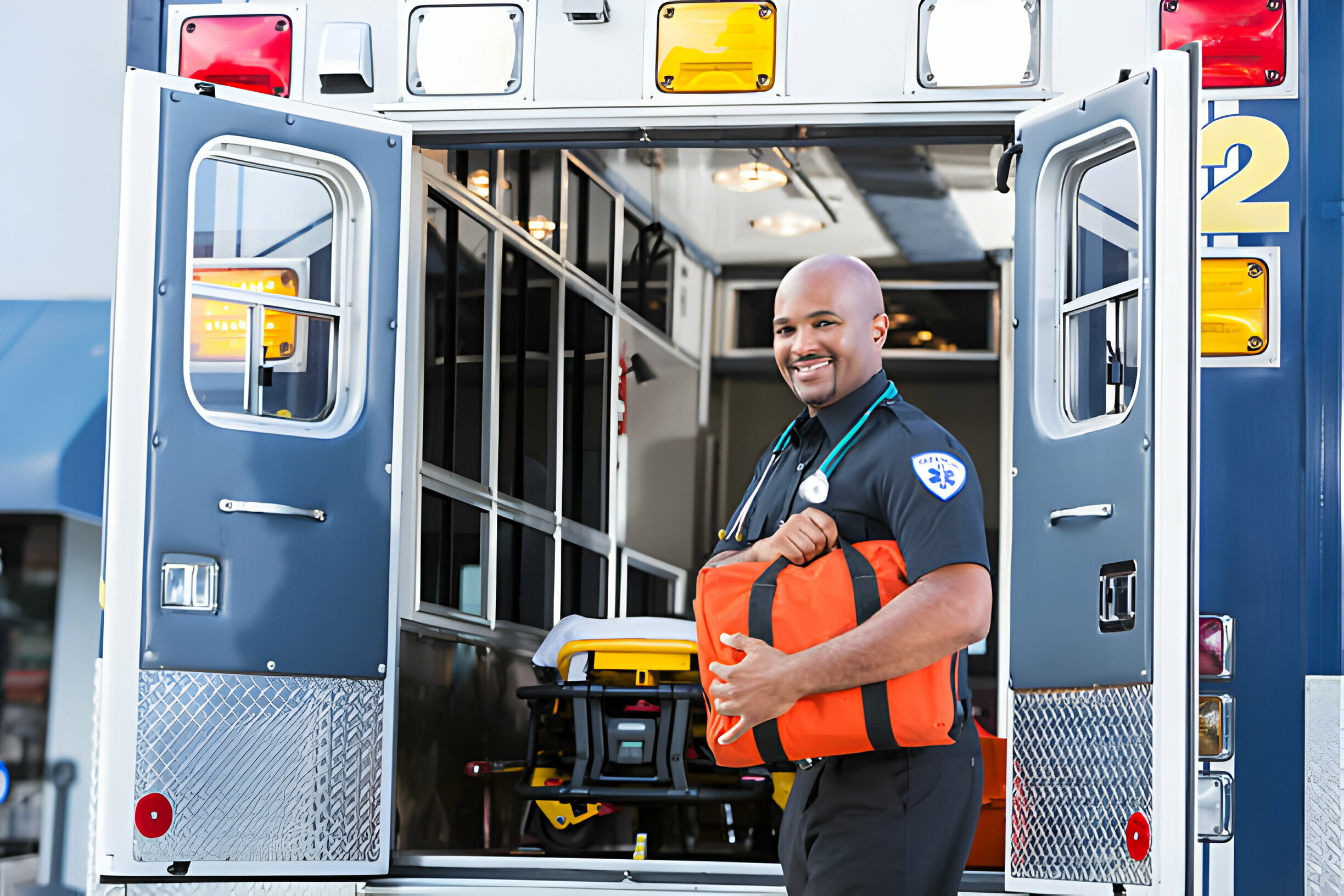
Extract from the article: At the heart of the medical emergency chain, ambulance drivers play an essential and often little-known role. Their profession, although sometimes underestimated, is of vital importance to the healthcare system. These dedicated professionals are ofte
At the heart of the
medical emergency chain, ambulance drivers play an essential and often
little-known role. Their profession, although
sometimes underestimated, is of vital importance to the healthcare system.
These dedicated professionals are often the first responders to the scene
of an accident or medical emergency. Their expertise can make the
difference between life and death.
Being an ambulance driver
is a great responsibility. It's a job that saves lives. Being an ambulance
driver is not just about driving the ambulance, it's also about accompanying
the doctor as the patient is transferred from home to the ambulance and from
the ambulance to hospital.
The vital role of ambulance
drivers
Ambulance drivers are much
more than just drivers of medical vehicles. They are trained to provide basic
emergency care, stabilise patients and transport them safely to the appropriate
health facilities. Their rapid intervention and mastery of first aid techniques
can save lives in the event of an accident, medical crisis or life-threatening
emergency.
Rigorous training
Specialised training is
essential for this profession.Ambulance staff generally follow intensive
courses including theoretical and practical instruction in first aid
techniques, patient management in emergency situations, defensive driving and
stress management.Some paramedics may also specialise in specific areas such as
paediatric transport, mountain rescue or the transport of critical patients.
Versatility and resilience
The daily life of an
ambulance driver is punctuated by unpredictability and urgency.They have to be
ready to intervene at any time, day or night, whatever the weather conditions
or circumstances.Their work requires great versatility and resilience. Ambulance
staff may be confronted with traumatic situations, such as serious accidents,
natural disasters or acts of violence. Despite this, they must remain calm,
focused and able to make quick and effective decisions to ensure the safety and
well-being of patients.
An essential link between
patients and healthcare professionals
As the first point of
contact for patients in emergency situations, ambulance drivers play a crucial
role in the medical care chain. Their reassuring presence and basic medical
skills help to stabilise patients until specialist medical teams arrive. What's
more, they coordinate the work of the various healthcare professionals, such as
doctors, nurses and medical technicians, to ensure that patients receive the
best possible care.
Challenges and sacrifices
Working as an ambulance
driver is not without its challenges. Schedules can be irregular, with long
working hours and unexpected emergencies. What's more, the job can be
physically and emotionally demanding, requiring a strong ability to deal with
stress, pressure and strong emotions. Despite these challenges, many ambulance
drivers are driven by a deep sense of duty and a desire to help others, making
their profession a true vocation.
Recognition and support
needed
Although their role is
essential to the smooth running of the healthcare system, ambulance staff are
sometimes neglected or underestimated.It is essential to recognise their
contribution and offer them adequate support, both professionally and
personally.This means safe working conditions, fair pay, high-quality
continuing training and access to psychological support services to deal with
difficult situations encountered in the course of their duties.
Raymond DZAKPATA
Source : hopitalvs.ch