
Cardiology: SOCART’s 3rd National Congress Strengthens Healthcare Professionals’ Skills in Cardiopulmonary Resuscitation
- Posted on 15/06/2026 17:56
- Film
- By abelozih@sante-education.tg
Extract from the article: The Togolese Society of Cardiology (SOCART) is holding its 3rd national conference from June 9 to 12, dedicated to cardiopulmonary resuscitation (CPR), an essential component of cardiovascular emergency care.
The
Togolese Society of Cardiology (SOCART) is holding its 3rd national conference
from June 9 to 12, dedicated to cardiopulmonary resuscitation (CPR), an
essential component of cardiovascular emergency care.
The
congress began on June 9 and 10 in Kara for healthcare professionals from the
Central, Kara, and Savanes regions, and will continue in Lomé on June 11 and 12
with doctors and paramedical staff from Greater Lomé, the Maritime region, and
the Plateaux region.
Under the theme: “Cardiopulmonary Resuscitation: Practical Resuscitation Workshops in Cardiology and a Review of the Key Points from the European Days of the French Society of Cardiology (JESFC 2025-2026) and the European Society of Cardiology (ESC),” this scientific meeting brought together nearly 300 practitioners, medical students, first responders, and paramedical staff to address issues related to the rapid management of cardiac emergencies.
Over
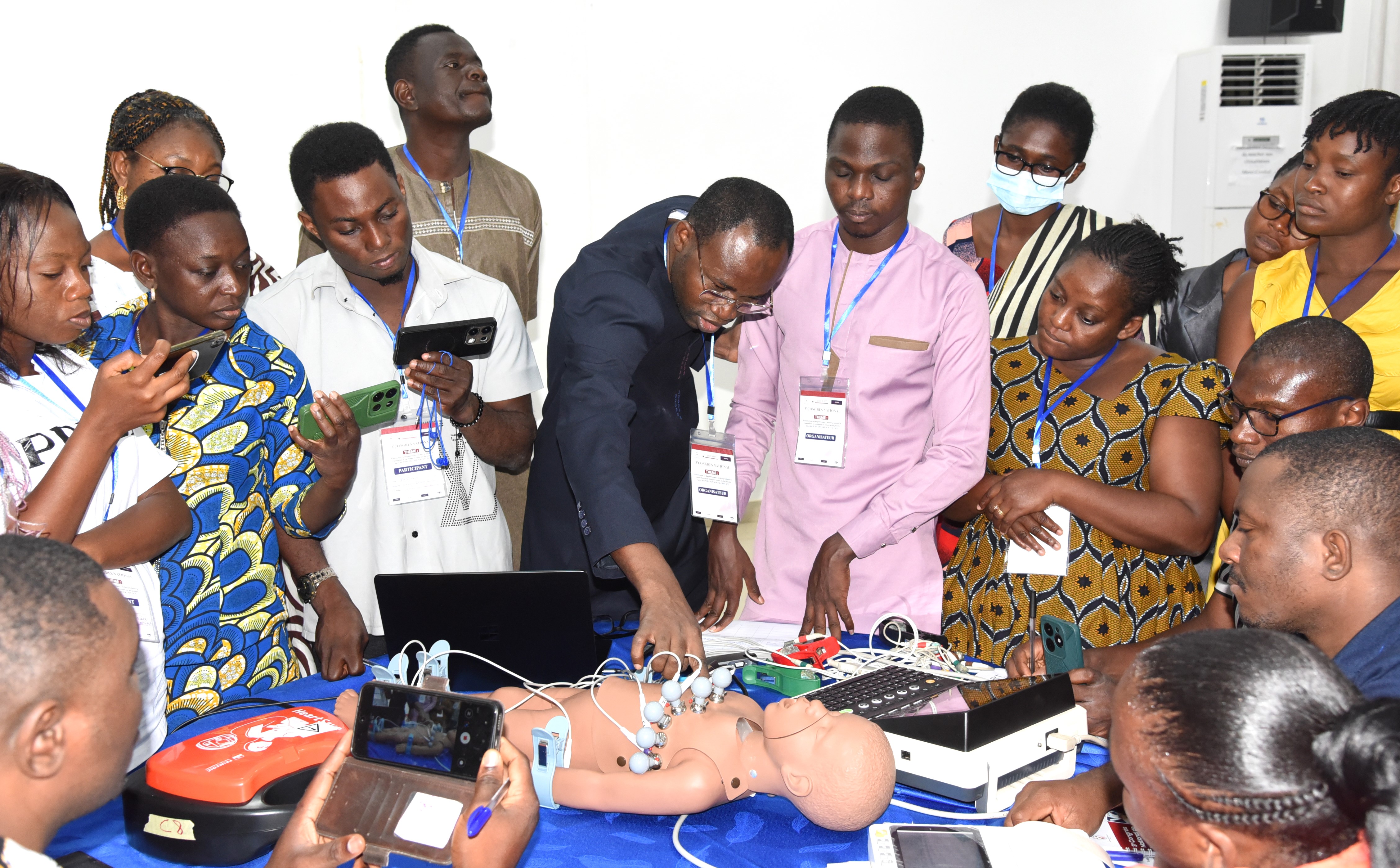
the course of the four-day event, participants took part in hands-on workshops
designed to hone their skills in managing critical situations that threaten
patients’ lives. The training focused in particular on the use of
multiparameter monitors, manual and automated external defibrillators (AEDs),
performing electrocardiograms (ECGs), cardiopulmonary resuscitation (CPR)
procedures, and triage techniques in cardiovascular emergencies.
The
Secretary General of the Ministry of Health, Dr. Kokou Wotobé, officially
opened the conference in Lomé. He emphasized that noncommunicable diseases,
particularly cardiovascular diseases, represent a major public health challenge
today, especially in resource-limited countries. According to him, this
conference offers a unique platform for discussion, reflection, and the
exchange of experiences to identify sustainable strategies for combating these
“silent killers.” He reaffirmed the government’s commitment to supporting all
initiatives aimed at strengthening prevention, improving the quality of care,
and optimizing the management of populations facing cardiovascular diseases.
SOCART
President Prof. Pio Machihude stated that the main objective of this year’s
event is to enable healthcare professionals to master the procedures and tools
essential for managing cardiac emergencies. He explained that many healthcare
facilities across the country now have modern equipment such as electric
syringes, multi-parameter monitors, and defibrillators, but that their use is
sometimes limited due to a lack of adequate training.
Professor
Machihude Pio also explained why part of the conference was being held in Kara.
According to him, this decision reflects a commitment to bringing continuing
education closer to healthcare workers practicing in the interior of the
country and to offering them the same professional development opportunities as
their colleagues in the capital. “The skills gained will free up time for
health workers and ensure high-quality care,” he stated, while encouraging
participants to serve as training facilitators within their respective
facilities to share the knowledge they have acquired.
In
Kara, the regional health director, Dr. Agoro Sébabé, praised an initiative he
considers beneficial for strengthening the skills of professionals in the
north. He urged the participants to put the lessons learned into practice and
share them with their colleagues in order to sustainably improve the quality of
care in health facilities.
The
Secretary General of the Kara Governorate, Gnigbangou Gountibote, noted that
this conference addresses a fundamental public health issue: mastering
life-saving procedures. He commended SOCART for its ongoing commitment to
continuing medical education.
Among
the participants, cardiologist Dr. Paul Agossou Defodji emphasized the
importance of cardiopulmonary resuscitation (CPR), which can be performed both
in hospitals and outside healthcare facilities. “The practice of
cardiopulmonary resuscitation is very important. These simple procedures can
save lives in the event of cardiac arrest, whether at home or in the city. The
first step is to clear the airway, then perform chest compressions while
waiting for emergency services. In the hospital, these reflexes are essential
for maintaining blood circulation,” he explained.
Through
this conference, SOCART aims to help build the capacity of healthcare
professionals and improve the management of cardiovascular emergencies in Togo,
in a context marked by the rise in heart disease and the need for a rapid and
effective medical response.
William O.