

How to use the morning-after pill
- Posted on 27/01/2023 16:00
- Film
- By abelozih@sante-education.tg
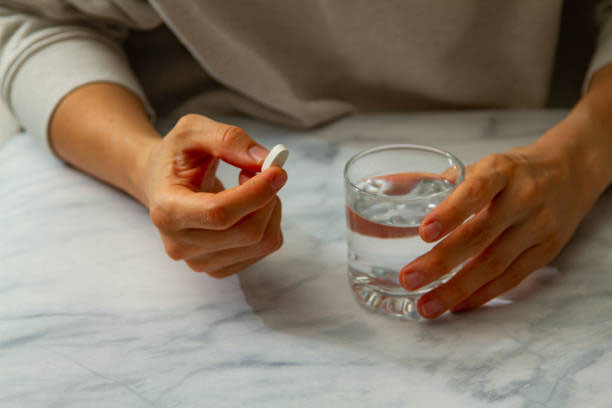
Extract from the article: Contraception is the set of means adopted to prevent sexual intercourse from leading to pregnancy. Even if very few women use it, the morning-after pill is one of the contraceptive methods that save many. The morning-after
Contraception is the set of means adopted to prevent sexual
intercourse from leading to pregnancy. Even if very few women use it, the
morning-after pill is one of the contraceptive methods that save many. The
morning-after pill is an emergency contraceptive that prevents pregnancy after
unprotected or poorly protected sex. Women under 30 are the main users. How
does it work?
In Togo, many women and young girls use the morning-after pill as
a regular method of contraception. This is the case of Sarah, 32, owner of a
sewing workshop. « I sometimes take it two or three times a month. The
morning-after pill allows me to avoid pregnancy. I use this pill a few days
after sexual intercourse, when I am in my fertilization period », she
confides. Carine, in her twenties, is a student in her final year at a private
high school. After classes, she spent a few hours with her boyfriend. When she
got home, she realized that she was not in a good time to have sex. She
panicked and told her cousin Adjo, a student at the University of Lomé, who
suggested that she take a morning-after pill to allay her concerns. Carine had
to resort to the morning-after pill to avoid getting pregnant while she was
preparing for her baccalaureate.
« I've used the morning-after pill before. A few years ago, I
had just received my certificate of completion of training in cooking. In the
euphoria that characterizes success, I let myself go without caution.
Fortunately, I had a friend who told me about it. It wasn't easy because I had
to pay 5000 FCFA », explains
Honorine, a restaurant owner.
Many other girls and women use this occasional method of
contraception at any time. Worse, they ignore the prescription. Some have paid
the price. « I had unprotected sex. Even though I used it, I got
pregnant », says Adèle. However, she does not remember how long it
took before she took the pill. The young woman is now the mother of a baby.
What is the morning-after pill?
The morning-after pill is « an emergency contraceptive
that prevents pregnancy after unprotected or poorly protected sex. It works
primarily by delaying ovulation and disrupting implantation. It is an
exceptional catch-up method for avoiding an unwanted pregnancy in the event of
unprotected or poorly protected sex. It is in no way an abortion pill: it
cannot trigger an abortion because it is no longer effective if fertilization
has already taken place », explains Dr. Dédé Bénédicta Améwoui,
Obstetrician Gynecologist.
The morning-after pill is delivered in the form of a single
tablet, which must be taken at the earliest within 12 hours after intercourse
with a glass of water and at the latest within 72 hours after the supposedly
fertilizing intercourse.
No effectiveness after 48 hours...
The morning-after pill should not replace regular contraception
and should be used occasionally. « The
earlier the morning-after pill is taken after risky sex, the more effective it
is. Although highly effective within 24 hours, its effectiveness drops off 48
to 72 hours after risky sex. The morning-after pill does not provide optimal
protection. Only a pregnancy test can confirm whether or not there is any doubt
about a possible pregnancy. It is therefore advisable to take a pregnancy test
within three weeks of the date of unprotected or poorly protected intercourse »,
emphasizes Dr. Améwoui.
Moreover, « the morning-after pill can also be used after
a condom accident (tear, misuse, slipping); an oral contraceptive forgotten
beyond the tolerated time; and the expulsion of an intrauterine device, or
hormonal contraceptive implant », indicates the gynecologist.
Moreover, even if the morning-after pill does not replace a means of
contraception, it is useful to always have a tablet at home or in your purse. A
single dose is enough.
Be careful!
The failure rate of this emergency contraception method is 30%.
This can lead to complications such as extra uterine pregnancies (EUP),
unwanted pregnancies, menstrual disorders and bleeding. However, even repeated
use of emergency contraception does not affect fertility.
« Furthermore, even if you have taken the morning-after pill
if you forget to take it, you should not interrupt your usual contraception,
take the forgotten pill as soon as you realize it and continue to take the
pills daily until the end of the pack. Remember to protect yourself with a
condom until your next period. Emergency contraception delivers only a
progestin and in theory has no contraindications. However, if there is a risk
or history of ectopic pregnancy, you should be more vigilant and watch for the
appearance of your period or any other symptoms », says Dr. Améwoui.
To avoid unpleasant surprises, consult a midwife or a gynecologist
who will advise a good method of contraception. The morning-after pill does not
protect against sexually transmitted infections such as STDs, STIs, HIV/AIDS,
or hepatitis B. In case of a risky relationship, it is important to get tested.
Abel OZIH