

The need for a blood glucose test
- Posted on 13/11/2023 17:41
- Film
- By abelozih@sante-education.tg
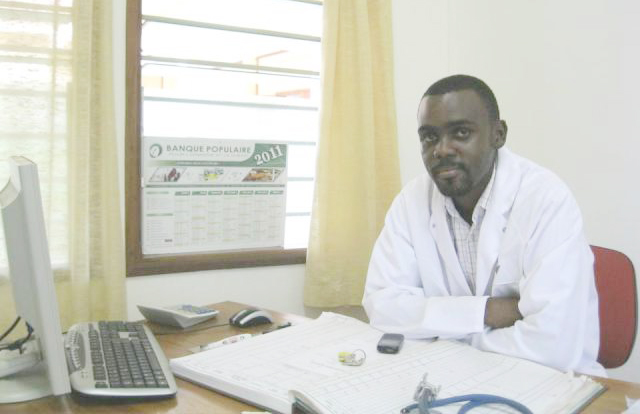
Extract from the article: The blood glucose test is carried out very simply by placing a drop of blood from the tip of your finger on a test strip. The result is obtained in a few seconds and displayed on the screen. While some people need to do this test several times a day,
The
blood glucose test is carried out very simply by placing a drop of blood from
the tip of your finger on a test strip. The result is obtained in a few seconds
and displayed on the screen. While some people need to do this test several
times a day, others only need to do it a few times a week. Why test your blood
sugar? Here's the answer from Dr Abdou Razak Moukaila, Internist and
Diabetologist at Hôpital Sainte Joséphine Bakhita in Lomé.
Type
2 diabetes meets all the criteria for a disease that warrants screening. It is
a common disease, long asymptomatic and potentially a source of serious and
costly complications.The risk factors are well known, enabling intervention to
be targeted at those most at risk, and screening can be carried out easily and
inexpensively.Treatment is easier and hyperglycaemia easier to control when the
diagnosis is made early.However, too many patients are only diagnosed when a
complication arises (ocular, cardiovascular or renal), which is a sign of
unrecognised diabetes that has been developing silently for a long time.There's
no need to wait for diabetes to manifest itself. Screening is a routine test
that doctors suggest regularly. The following situations may indicate the need
for screening: weight loss, attention problems, reduced visual acuity, unusual
tiredness, recurrent thirst with frequent urination, malaise or in pregnant
women.
Nevertheless,
it seems reasonable to propose, as a first step, opportunistic screening
targeted at people at risk. The risk factors for Type 2 diabetes are well known
and easily identifiable: the existence of a family history, the presence of
overweight or obesity, age, the existence of markers of metabolic syndrome
(hypertension and dyslipidaemia), a history of gestational diabetes or any
hyperglycaemia, even transient hyperglycaemia, which is often
overlooked.Finally, certain groups deserve special attention: at-risk ethnic
groups, disadvantaged populations, people with sleep apnoea, etc.If one or more
of these risk factors is present, all healthcare professionals should suggest
screening for T2DM.If the test is negative, it should be repeated every 3 years,
or sooner if the person has several risk markers or if fasting blood glucose
levels are borderline (100-125 mg/dl).If the test is positive, it must be
confirmed by a second analysis before a diagnosis is made.
The
simplest way is to take a fasting blood glucose test, which is the most
reproducible and easiest to interpret.Ideally, a blood sample should be taken
and the blood glucose level measured in the laboratory, which is more accurate,
although capillary measurement with a blood glucose meter may be considered as
a first-line measure (to be confirmed by a laboratory measurement if the value
is high, greater than or equal to 125 mg/dl, or doubtful, between 100 and 125
mg/dl).
The
earlier T2DM is detected, the easier it is to treat.Any hyperglycaemia requires
the reinforcement of dietary hygiene measures and a minimum check-up to look
for complications associated with diabetes.
Interview
by Abel OZIH