
Depigmentation: risk of skin cancer
- Posted on 15/05/2026 11:21
- Film
- By abelozih@sante-education.tg
Extract from the article: A widespread practice in Africa, the voluntary depigmentation of the skin, commonly called « bleaching », is a real public health problem. Motivated by aesthetic and socio-cultural considerations, it nonetheless exposes millions of people to serious
A
widespread practice in Africa, the voluntary depigmentation of the skin,
commonly called « bleaching », is a real public health problem.
Motivated by aesthetic and socio-cultural considerations, it nonetheless
exposes millions of people to serious risks, including skin cancer.
According
to data relayed by the World Health Organization (WHO), in sub-Saharan Africa,
25 to 96% of women use voluntary depigmentation products, with even higher
rates in some countries such as Nigeria (77%). In Togo, one of the best-known
scientific studies, published in 1998 in the journal Médecine d'Afrique Noire,
focused on 910 women aged 15 to 56 years in Lomé. It revealed that 536 women,
or 58.9%, used depigmenting products. These products work by reducing the
production of melanin, a natural pigment that protects the skin from
ultraviolet rays.
Products
that are hazardous to health
The
most commonly used substances in depigmenting products are hydroquinone,
corticosteroids and mercurials. Although effective in lightening the skin,
these components are associated with many side effects.
Among
the most common consequences are thinning of the skin, skin infections,
irreversible stretch marks, hormonal and metabolic disorders. Among female
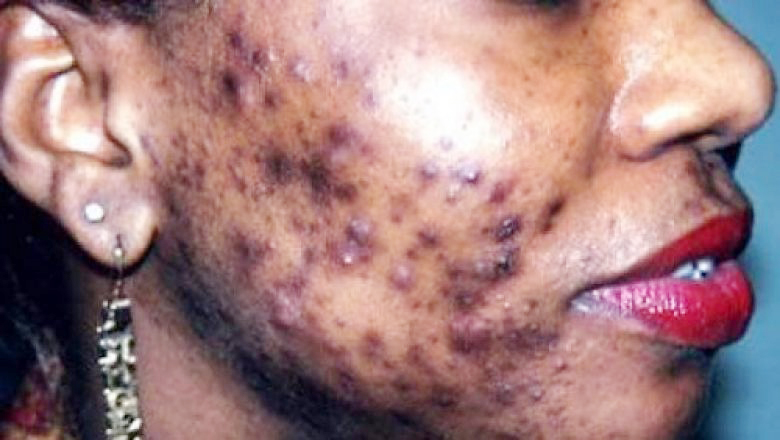
users in Lomé, 69.2% had dermatological side effects: severe acne, stretch
marks, skin infections, black spots and delayed healing. Prolonged use can also
lead to destruction of melanocytes, cells responsible for pigmentation.
Depigmentation
and skin cancer
Melanin
plays an essential role as a natural barrier against UV rays. Its reduction
makes the skin much more vulnerable to external aggressions.
Several
studies and clinical observations in Africa show that depigmentation
significantly increases the risk of skin cancer and promotes the development of
carcinomas, particularly epidermoid ones.
In
black skin, 38% of skin cancers were favored by artificial depigmentation. The
latter having caused a destruction of the immune defenses doubly exposes the
skin to climatic attacks and the development of cancer cells. According to the
International Association for Artificial Depigmentation Information (AIIDA),
seven types of squamous cell carcinoma have already been identified as
resulting from artificial depigmentation using hydroquinone and
corticosteroids.
By
weakening the skin, these products also facilitate chronic lesions, which can
evolve into cancerous forms.
Psychological
and social consequences
Beyond
the physical effects, depigmentation can lead to product dependence, altered
self-image, psychological disorders and even depression. This phenomenon is
part of a context of social pressure that values fair skin.
An
urgent public health issue
Faced
with the increase in cases of complications, experts call for increased public
awareness and better regulation of cosmetic products. We must encourage the
acceptance of the diversity of complexions
Depigmentation,
far from being a mere aesthetic choice, is a preventable risk factor for skin
cancer in Africa. Informing and preventing remain the best weapons to protect
people’s health.
Raymond
DZAKPATA (Source: « International Association for Information on
Artificial Depigmentation » (AIIDA)