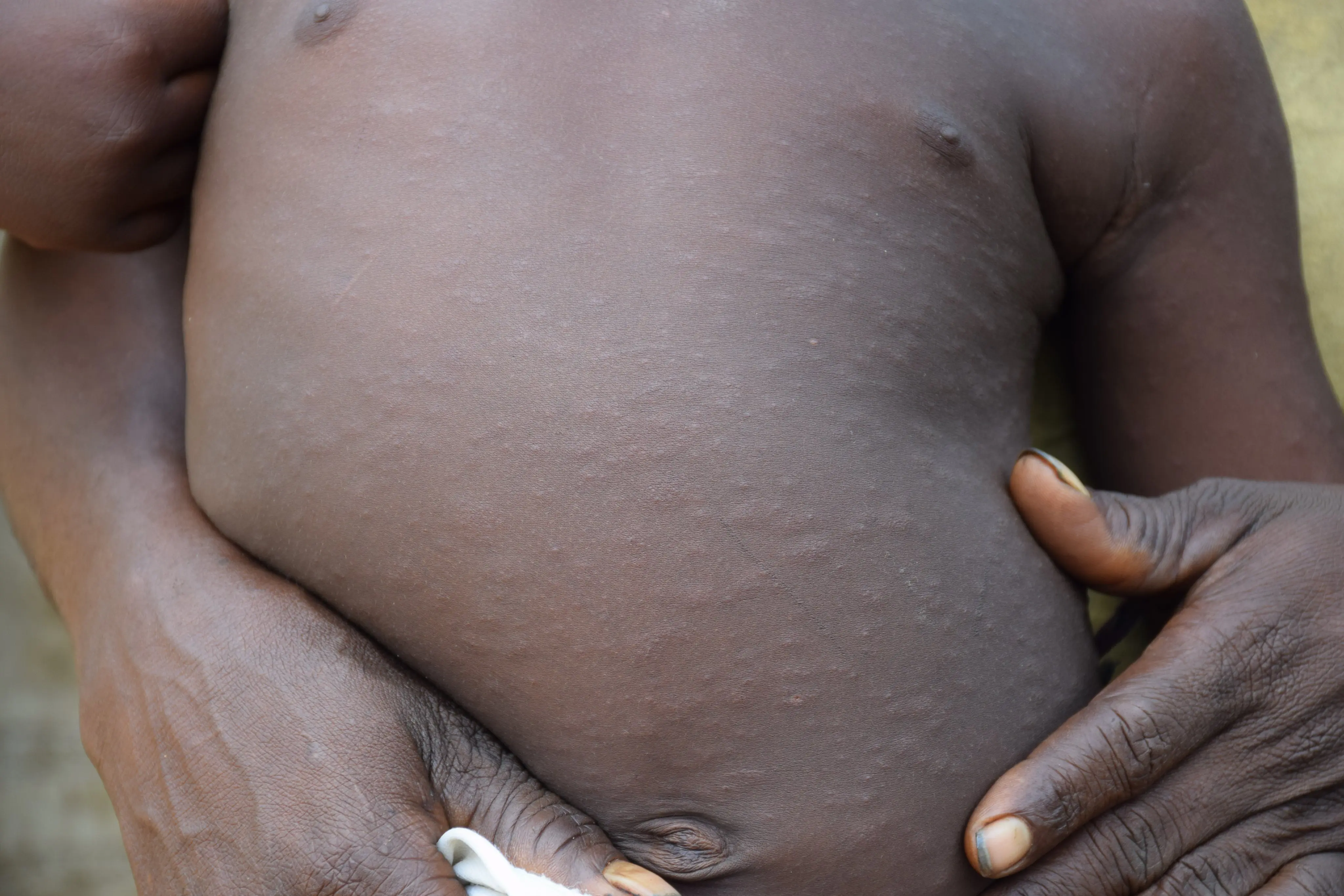

The ‘double burden’ of undernourishment and obesity in Africa
- Posted on 14/08/2024 18:15
- Film
- By abelozih@sante-education.tg

Extract from the article: Almost one billion people worldwide are affected by obesity. These are the findings of a study published in the British medical journal ‘The Lancet’ and carried out in collaboration with the World Health Organisation (WHO) to mark World Obesity Day o
Almost
one billion people worldwide are affected by obesity. These are the findings of
a study published in the British medical journal ‘The Lancet’ and carried out
in collaboration with the World Health Organisation (WHO) to mark World Obesity
Day on 04 March 2024.
The
epidemic has progressed ‘faster than anticipated’, according to Prof. Francesco
Branca, Director of the WHO's Department of Nutrition for Health and
Development, at a press conference at the end of February. According to Prof.
Majid Ezzati of Imperial College London, one of the main authors of the study
carried out by the British medical journal ‘The Lancet’ in collaboration with
the WHO, the number of people affected by obesity was initially expected to
pass the one billion mark around 2030.
According
to this vast study, between 1990 and 2022, the rate of obesity in the
population quadrupled among children and adolescents, and doubled among adults.
This rate has almost tripled among men and doubled among women. What is even
more worrying is that in 2022, this disease will affect almost 160 million
children and teenagers (94 million boys and 65 million girls). Some 30 years
earlier, the figure was 31 million.
‘Double
burden
According
to this study, some low- and middle-income countries now have higher obesity
rates than many industrialised countries, particularly in Europe. Not eating
enough, but also eating badly: many low- and middle-income countries are
experiencing the ‘double burden’ of undernourishment and obesity, particularly
in Africa. While some of their populations still do not have access to a
sufficient number of calories, others no longer have this problem, but their
diet is of poor quality.
In
2022, a WHO study, which warned of this ‘time bomb’ for public health, pointed
to ten countries particularly affected, most of them in southern Africa:
Botswana, Eswatini, Lesotho, Mauritius, Namibia, Seychelles and South Africa.
But also, further north: Gabon, Mauritania and Algeria, which holds the record
for the highest number of obese people on the continent.
In
Togo, 6.2% of the population is obese, according to a study by the Ministry of
Health's Department of Non-Communicable Diseases, carried out in collaboration
with the World Health Organisation. The World Health Organisation (WHO) has
noted that obesity among children under the age of 5 is reaching ‘alarming’
levels in developing countries, particularly in Africa.According to survey data
collected from infirmaries in Togo's two public universities, 8% of registered
students are reported to be obese and 12% overweight, out of a total enrolment
of 50,000.For Dr Raymond Kossi Barruet, Diabetologist (Lomé), obesity is
influenced by cultural factors. As long as you're not handicapped in your daily
life by your weight, you don't notice it. Obesity is due to stress, a sedentary
lifestyle and what Dr Barruet paradoxically calls an improvement in diet. We're
eating more and more sweets and starchy foods.Yam-based fufu, maize-based
dishes and rice are all taking up a lot of space in our diets these days. All
these foods eaten without physical activity tend to make us put on weight.
Specialists
are very concerned about the prevalence of obesity in schools, particularly in
large cities, where severe, morbid obesity is found in very young children.
Westernised
lifestyles
A
complex, multifactorial chronic disease, obesity is accompanied by an increase
in mortality due to other pathologies, cardiovascular disease, diabetes and
certain cancers. The Covid-19 pandemic, in which overweight was a risk factor,
is a case in point.Obesity is going to be a risk factor for a number of
diseases, in particular arterial hypertension, which is a crucial problem in
Africa, says Colette Azandjeme. With the attendant risk of stroke, myocardial
fracture and all the other cardiovascular diseases.Obesity, with all its
attendant endocrine disruption, is also a major risk factor for cancer.The
prevalence of cancer is rising. It's a phenomenon that wasn't very well known a
few years ago, but more and more cases of cancer are appearing, particularly
female cancers, breast cancers, uterine cancers, male cancers such as prostate
cancer and other types of cancer such as childhood cancers.Obesity is also a
major risk factor for diabetes. And there are countries with higher prevalence
rates, particularly in North Africa and South Africa’.
Obesity
primarily affects people living in urban areas, although rural areas are also
affected. The finger is pointed at junk food and a sedentary lifestyle. Colette
Azandjeme, professor of public health and nutritionist at the Mother and Child
Hospital in Cotonou, Benin, believes that one of the causes of obesity is ‘the
nutritional transition that has seen our lifestyles change and become more
westernised’, she explains.We're moving from a much more traditional diet to a
Europeanised, energy-dense diet.We're exposed to increasingly processed and
ultra-processed foods’.At the same time, our lifestyles have become more
sedentary: ‘there is very little physical activity to compensate for this,’
comments the professor.Over time, we've lost the habit of walking a lot.There
are more motorbikes, more cars.We sit in front of the television for longer.We
adopt activities that are more bureaucratic: in sales, in commerce, where we
sit for longer periods of time’. Add to this a lack of sleep and increased
stress. A cocktail that favours an increase in obesity.
Taxing
sugary drinks, subsidising healthy foods, limiting the marketing of unhealthy
foods to children, encouraging physical activity... According to the WHO, these
measures, which are rarely used, could help to slow the spread of this scourge.
William
O.