
Family planning in Togo: religious leaders, key allies for women's development and empowerment
- Posted on 02/10/2024 18:13
- Film
- By abelozih@sante-education.tg

Extract from the article: Recognising the crucial importance of social norms and the role of religious leaders in achieving the objectives of the Ouagadougou Partnership (OP), the OP Coordination Unit (UCPO) organised a regional OP civil society workshop from 01 to 03 October
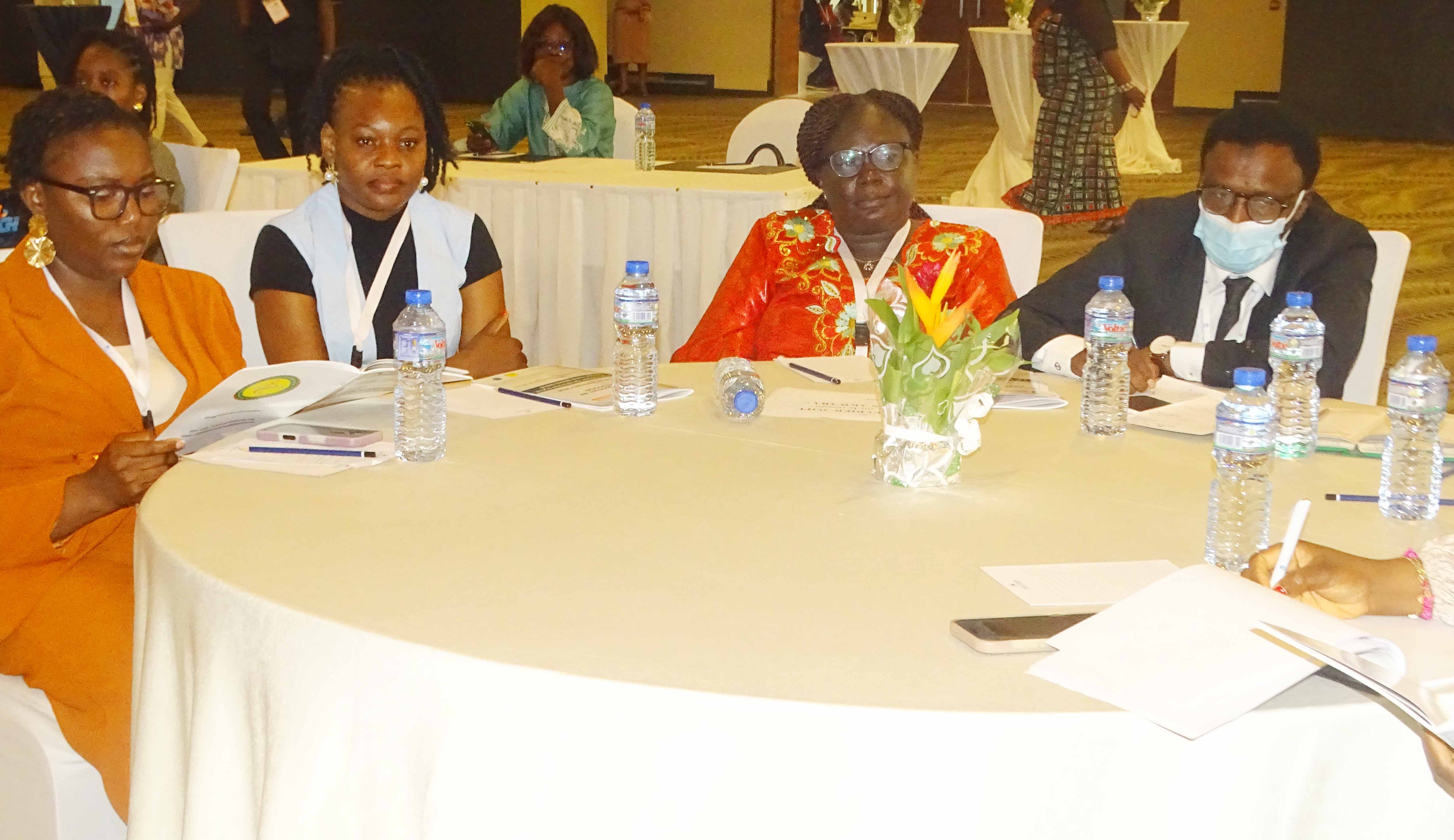
Recognizing the importance of social norms and the role of religious leaders in family planning, the Ouagadougou Partnership Coordination Unit (UCPO) organized a regional workshop from October 1 to 3, 2024. The meeting aimed to highlight the contribution of religious leaders to achieving the PO's objectives. It also served to strengthen collaboration between civil society, young people, and partners.
During these three days, participants took stock of the contribution of religious leaders to achieving the PO's objectives. They also discussed the successes, challenges, and prospects of stakeholders, particularly religious leaders, in achieving the results of the new phase of the PO. The discussions identified promising activities to be imporant out in favor of FP in countries in crisis. In addition, the meeting assessed the impact of religious extremism on the progress of the feminist movement, enabling strategies to be defined to counter discriminatory discourse. Finally, it was an opportunity to renew the regional offices of the Alliance of West African Religious Leaders for Health Promotion and Development (ARAO/SD) and to strengthen ties between the various actors involved in the implementation of the Ouagadougou Partnership.
 Images from the workshop sessions
A
fundamental role in overcoming cultural barriers
Experience
since the launch of the OP in 2011 shows that attitudes and behaviors related
to family planning are largely influenced by religious values and cultural
practices. Religious leaders are respected figures who are well placed to
influence behaviors and overcome cultural barriers. Their role is all the more
crucial in Togo, where the majority of the population listens to their advice.
Dr.
Abram Amétépé Agossou, Director of Maternal and Child Health at the Togo
Ministry of Health, explained that "When it comes to religion, our
values and social norms sometimes influence access to family planning services.
Some people believe that using contraception is a sin. So we need religious
leaders to help us explain what family planning is and find holy words that can
be used to convey this message. They help us find passages that make the
message easier to understand. We recognize the importance of social norms and
the role of religious leaders in achieving the goals of the OP." Their
influence and credibility are major assets in changing perceptions.
Progress,
demand, and health emergency
Togo
has made significant progress in family planning, as recognized by FP2020 and
the WHO. The country recorded a Contraceptive Prevalence Rate (CPR) of 24% in
2022, according to the Ministry of Health. This figure is higher than the
average of 19% mentioned in the text for West Africa in 2024. The rate was
13.2% in 2010, illustrating a notable increase over the years. Nevertheless,
demand for contraceptives remains very high in Togo. Thirty-four percent of
demand is unmet, indicating a persistent need to improve access to methods.
Togo also has high rates of maternal and infant mortality. There were 399
maternal deaths per 100,000 live births in 2021 and an infant and child
mortality rate of 146 children per 1,000 live births. Improving family planning
is an essential lever for reducing these tragic indicators.
Actions
by religious leaders and adoption of inclusive language
To
counter resistance from certain communities, religious leaders have adapted
their approach by relying on associations such as the Alliance of West African
Religious Leaders (ARAO/SD). Imam Karim Sani Yaya, in Totsi, highlighted this
strategy: "Since the Ministry of Health began its awareness campaigns,
many of the faithful were reluctant to adopt these contraceptive methods. Because
when we talk about family planning, people immediately think of birth control.
So we adopted the expression “responsible procreation” to explain that it's not
really about stopping the problem, but about spacing out births to allow the
mother to recover and the first child to grow up before having a second one.
Religious
leaders have a responsibility to raise awareness in places of worship and
mosques about adopting methods that enable people to protect themselves.
Reverend Pastor Nassoime Jacques of a Protestant church in northern Togo
emphasizes : "The Church promotes family planning for spiritual and
physical health. We take advantage of departmental meetings to raise awareness
among the faithful. We advise couples to space out their pregnancies and to
take responsibility so that they can take good care of the children they bring
into the world. And to young people, so as not to lead them astray, we propose
chastity according to the Bible."
On
the traditional side, His Majesty Togbui Essi Akpovi in Nikonakpoè uses an
approach based on cultural values. "In tradition, we don't talk about
family planning as a science, but as ancestral wisdom. The land only yields
good crops if it is left to rest. Similarly, we teach that women's health is
sacred because they are the pillars of the family and the clan. We advise young
mothers to space out births so that each child can be a source of strength for
our community," His Majesty emphasized.
The
impact of FP on empowerment and development
Sexual
and reproductive health rights are essential for women's empowerment. By
enabling women to control their own bodies and lives, FP helps reduce maternal
mortality, unwanted pregnancies, and sexual violence. These rights also give
young girls the opportunity to continue their education, access employment, and
participate fully in social and economic life for the development of the
country. Access to contraception and quality care helps prevent early
pregnancies and unsafe abortions, which are major problems in Togo. It is
estimated that one in five girls worldwide gives birth to her first child
before the age of 18. In addition, pregnancy-related complications are one of
the leading causes of death among adolescents aged 15 to 19. One of the
advantages of family planning is that it allows parents to enjoy a good
economic situation. It is essential that religious leaders work alongside
health professionals to help convey these messages more effectively, by finding
passages in the Bible or the Koran that corroborate the importance of this
practice.
Persistent
challenges, threats, and inequalities in understanding
Despite
efforts, significant challenges remain, particularly in Togo. Access to care
remains unequal due to underfunding of the health system, lack of staff and
medicines, and discrimination. Factors such as the side effects of
contraceptive methods, social influences, low levels of knowledge, and the
desire for motherhood contribute to the abandonment of long-acting methods,
particularly in rural areas. In addition, the resurgence of fundamentalism and
the rise of religious conservatism threaten gains in women's rights. A woman's
right to make autonomous decisions about her own body and reproductive
functions is central to her fundamental rights to equality, privacy, and
physical integrity.
At
the doctrinal level, the distinction between methods is a major issue. An
opinion leader from the savannah region rejects the use of certain
contraceptives outright in his opinion on FP and medical termination of
pregnancy (MTP): « We cannot recommend non-abortive methods. But
methods that involve removing the embryo, I believe we need to think carefully
before committing to them because we are regularly taking lives, and as
Christians we cannot encourage Christians in this direction. What we preach is
sexual abstinence. »
Amid
this lack of understanding, another Islamic leader in the savannah expressed
this deep conviction, illustrating the challenge of alignment: « Whether
it be vasectomy, tubal ligation, the use of pills, or anything else, family
planning would also mean avoiding having children. And Islam forbids that.
Abortions and any form of medical termination of pregnancy are considered a
sin. Because the Quran states in Sura 6, verse 151: do not kill for fear of
poverty. »
These
reservations highlight differences in understanding of the message of family
planning between healthcare professionals and certain spiritual leaders. For
the latter, the theological principles of divine support for life sometimes
take precedence over economic and health needs.
These comments highlight the need for
sustained interfaith dialogue, especially since the term “family planning” can
be perceived as a limitation imposed on divine will. Young people in particular should be
encouraged to consider marriage as a form of management, even if only within
the family, before engaging in intimate relationships, in order to avoid
unwanted and irresponsible pregnancies. Religious leaders are at the heart of
this struggle and need to be trained and better equipped to address family
planning issues more easily.
Togo
has made significant progress in access to FP, partly thanks to the commitment
of certain religious leaders who use the concepts of “spacing” and “responsible
procreation.” These practices are essential for reducing maternal and infant
mortality and are a fundamental pillar of women's socio-economic empowerment.
To consolidate these gains in the face of fundamentalist threats, it is
imperative to integrate coaching programs for religious leaders to ensure a
unified and accurate message about contraceptive methods in Togo. Only a common
level of understanding between health and doctrine will make it possible to
effectively meet the country's high unmet demand.
Esther KOLANI