
5th Annual Regional Meeting of the Community of Practice (CoP) on PFPP integrated into Maternal, Newborn and Child Health (MNCH) and Nutrition
- Posted on 22/10/2024 18:15
- Film
- By abelozih@sante-education.tg

Extract from the article: From 22 to 24 October 2024, Lomé hosted the 5th annual regional meeting of the Community of Practice (CoP) on the integration of post-partum family planning (PFPP) with maternal, newborn and child health (MNCH) and nutrition. Participants from 16 cou
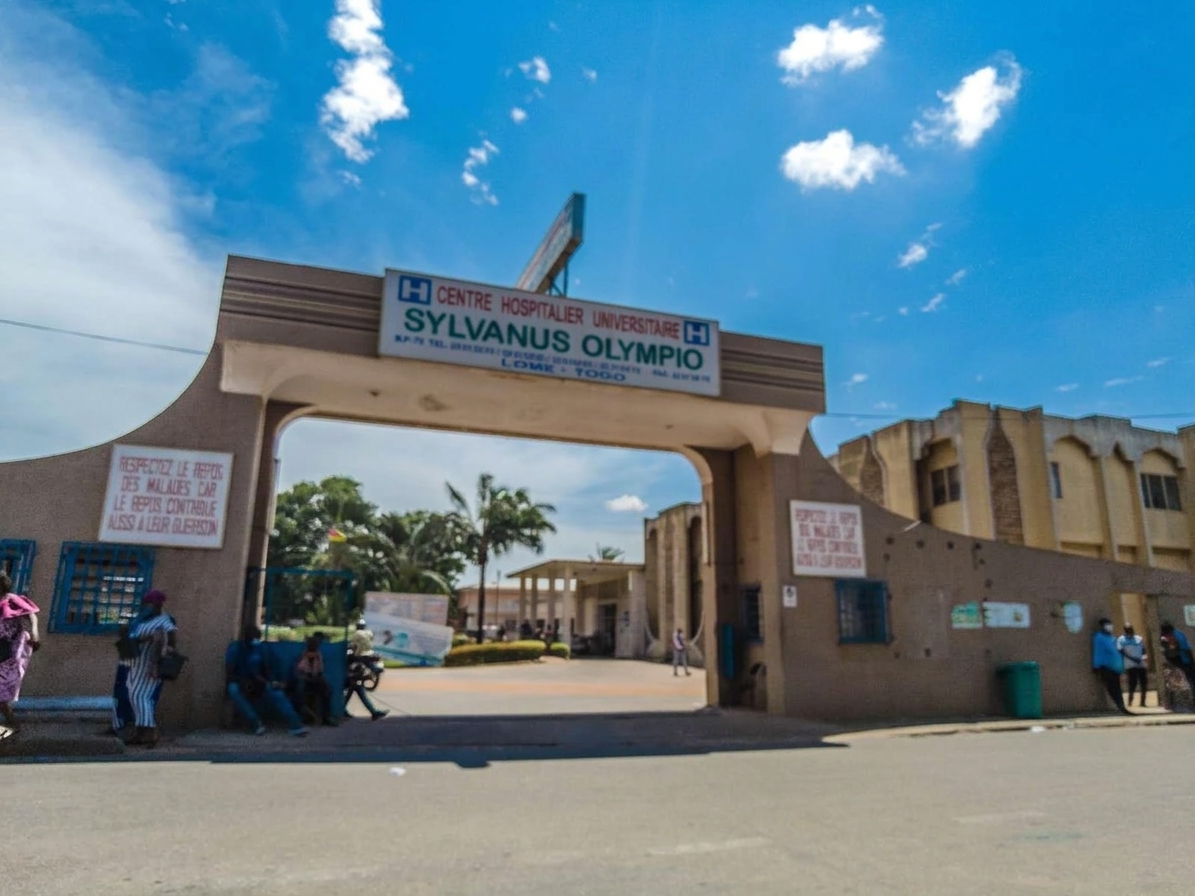
From 22 to 24 October 2024, Lomé hosted the 5th
annual regional meeting of the Community of Practice (CoP) on the integration
of post-partum family planning (PFPP) with maternal, newborn and child health
(MNCH) and nutrition. Participants from 16 countries took stock of commitments and the
level of implementation of country scale-up plans (PAGE) according to the
resources mobilised, to share experiences and lessons learned from this
scale-up strategy with other French-speaking countries, and to further mobilise
SRMNIA-N stakeholders by promoting synergies and complementarity in the
countries. The theme of the meeting was ‘Scaling up the
integration of Post Partum Family Planning (PPFP) with Maternal, Newborn and
Child Health-Nutrition (MNCH-N) and synergy of action between partners to
achieve the 2030 Goals in French-speaking countries in the African region’.
The conference was opened by Dr Kokou Wotobé, Secretary General of the
Ministry of Health and Public Hygiene, representing the Minister of Health and
Public Hygiene.
In
French-speaking West Africa in 2021, there will be 347 maternal deaths per
100,000 live births and 31 neonatal deaths per 1,000 live births, and unmet
need for family planning (FP) is high, with only 43% of women having their FP
needs met. 1 in 2 women in need is post-partum.Chronic malnutrition rates are
high, ranging from 21.2% to 42.2%.Togo is not left behind in this situation;
maternal mortality is 401/100,000 live births, neonatal mortality 27/1000 with
a Contraceptive Prevalence Rate of 23.2% and 24.5% of unmet need for family
planning.Stunting of 23.8% is also observed in children under 5.
These
figures illustrate the urgent need for action to improve maternal and neonatal
health. Although progress has been made, the indicators remain above the
thresholds tolerated by the WHO, requiring greater efforts to achieve the
Sustainable Development Goals (SDGs), particularly SDG3 by 2030.
The regional Community of
Practice (CoP) is working to address these challenges by bringing together
stakeholders from West Africa and beyond around a strategy for integrating FP,
maternal, newborn, child health and nutrition (MNCH-N) care.The CoP helps countries
to strengthen their leadership in scaling up integrated practices, improving
access to care for mothers and children while reducing missed opportunities for
FP uptake.
A framework for exchanging
and sharing experiences
The 5th regional
meeting of the CoP will focus on intensifying the integration of FP and MNCH-N,
with the aim of strengthening the synergy between partners to achieve the
objectives set for 2030 in the French-speaking countries of Africa.Over the
course of 3 days, the participants will take stock of the implementation of the
recommendations of the 2023 annual meeting, present the results of the round
tables on the financing of plans for scaling up held in Burkina-Faso, Mali,
Niger and Senegal, and follow up the commitments made by the stakeholders and
monitor the progress made by the countries and the synergistic actions of the
partners to advance integration
According to Dr Medessi
Yves Armand Mongbo, President of the CdP, "the pace of progress is
currently slow in some countries. This
is why the integration of services - the integration of PFPP and SMNI-N - has
been chosen as a high-impact intervention. It has been adopted as a
model for accelerating progress, and all the shrinks have accepted it and are
putting it into practice. This meeting provides us with a unique
platform to share our experiences and lessons learned, and to mobilise SMNI-N
stakeholders to become more involved, because we also need to work towards
setting up a catalytic fund to support the scaling up of country plans’.
The participants will also
provide an update on the state of mobilisation of resources from the 2NIBA
pooling fund managed by Baobab Institute and the ongoing financing of country
PAGE plans through this fund. They will also discuss the new structure of the
CoP to take account of the commitment of other French-speaking African
countries, notably Central Africa and Madagascar, in the integration process.
Finally, they will define and share the prospects for the COP for the period
2025-2026.
The Secretary General of the Ministry of Health
acknowledges that most countries are still far from achieving the 2030 targets,
but have the tools and opportunities to implement high-impact interventions at
scale to accelerate progress. "The integration of essential mother and
child health services is one of these crucial interventions.Yes, the
integration of services reflected in policy documents and implemented in most
countries has proven its effectiveness in the continuum of mother and child
healthcare with a significant impact on indicators.We must intensify our
efforts and take courageous action to effectively achieve Universal Health
Coverage and reach the MDGs.Consequently, implementing and scaling up this
effective practice is a necessity and a hope for meeting the challenges of
accessibility, availability and use of essential health services for mothers
and children, and reducing avoidable maternal and infant deaths’, insisted
Dr Kokou Wotobe.
PFPP, a high-impact practice
With a view to providing a response to preventable
deaths in low-resource settings, since 2014 the World Health Organisation (WHO)
has been recommending the provision of person-centred integrated holistic care,
i.e. care that meets the needs of populations. In this, the community of
practice has proved useful in appropriating the new guidelines demonstrating
the relevance of integrating services.The community of practice is attracting
growing interest in various areas of public health.It is a collaborative way of
working that is proving invaluable in supporting care providers in their
practice.
The regional community of practice has been a major
support to countries in accelerating the scaling up of PFPP integrated with
MNCH and nutrition in West Africa.
PFPP is a proven high-impact practice, and the WHO in
2014 recommended considering postpartum family planning (PFPP) programming as
an integral part of existing maternal and child health and family planning
activities. This high-impact approach, piloted in some health districts, has
facilitated the continuum of care, increased the use of services and uptake of
FP, and reduced missed FP opportunities. Based on these findings, the Community
of Practice has supported countries to develop national scale-up plans (NSPs)
as well as training and mentoring programmes.
However, the mobilisation of internal resources and
financial partners remains one of the main challenges to be met in the
countries currently implementing these plans. In order to achieve the scaling
up of integrated care, the technical and financial partners have reaffirmed
their commitment to pooling resources and funding to provide efficient support
to countries in their efforts to improve maternal and newborn health.
Abel OZIH