
CNAO: 2024 Review of Rehabilitation Activities in Togo
- Posted on 19/03/2025 18:51
- Film
- By raymonddzakpata@sante-education.tg

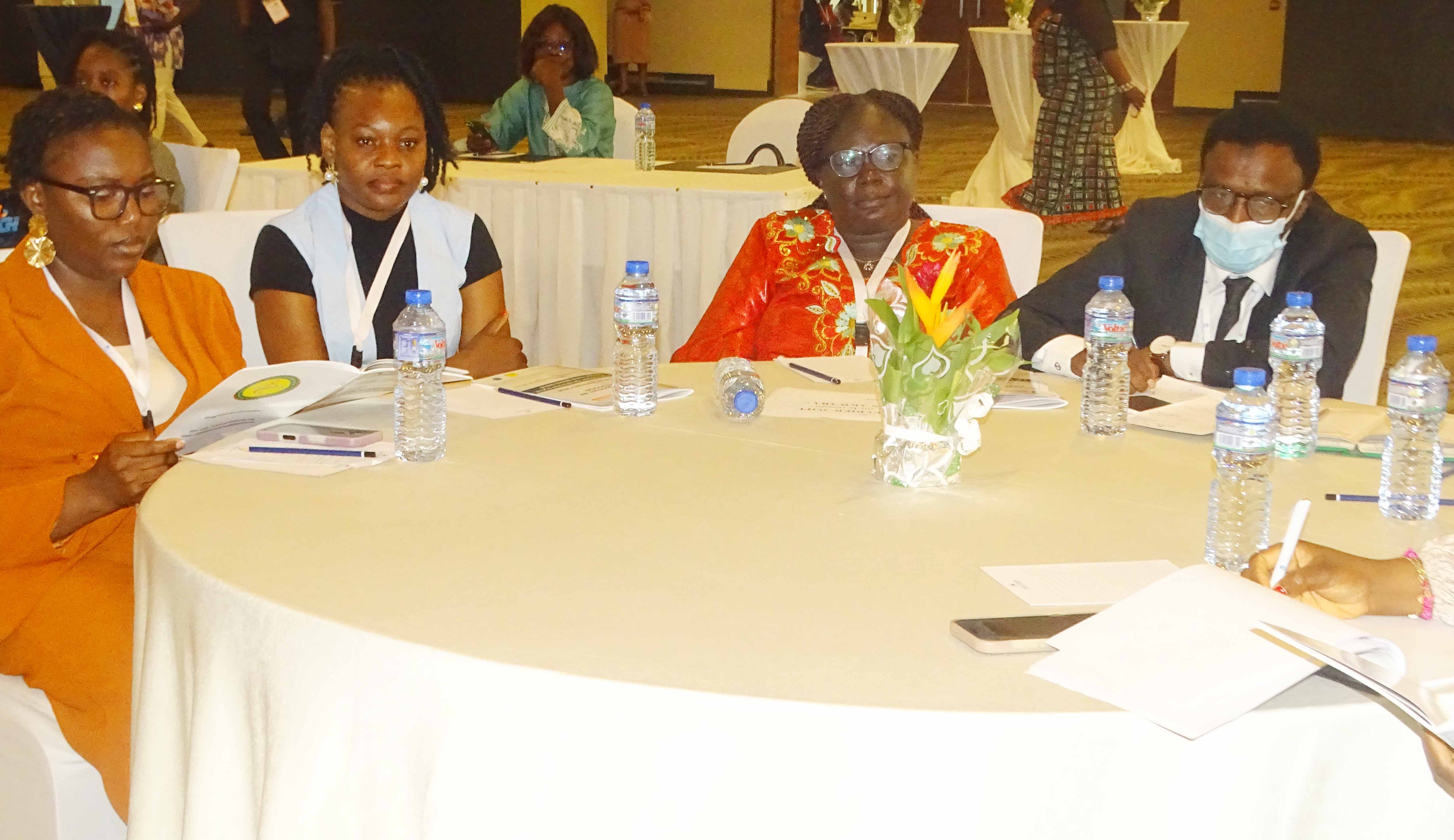
Extract from the article: Le Centre National d'Appareillage Orthopédique (CNAO), sous l'égide du Ministère de la Santé et de l'Hygiène Publique, a procédé du 19 au 20 mars 2024 à la revue des activités de réadaptation au Togo. L’objectif est d’évaluer les progrès...
The National Center for
Orthopedic Equipment (CNAO), under the aegis of the Ministry of Health and
Public Hygiene, conducted a review of rehabilitation activities in Togo from March
19 to 20, 2024. The objective was to assess progress, identify challenges, and
formulate strategic recommendations to improve access to and quality of
services for people with disabilities. The workshop was officially opened by Mrs.
Tebié Abidé épouse Sekou, representative of the Minister of Health and Public
Hygiene.
According to estimates from
the latest 2022 General Census, about 10% of the Togolese population lives with
a disability—whether motor, sensory, or intellectual. However, access to rehabilitation
services remains limited due to a lack of infrastructure, qualified
professionals, and insufficient awareness of the rights of people with
disabilities.
To address these
challenges, the CNAO—now a reference institution for rehabilitation at the national
and international levels—took the initiative to organize this inclusive
national review to evaluate progress and explore ways to improve services. The
main objective of this workshop was to create a platform for discussion and
presentation of rehabilitation activities in Togo.
For two days, stakeholders
exchanged on practices and strategies implemented to enhance access and quality
of rehabilitation services, identified gaps and challenges in service delivery,
and proposed solutions to strengthen infrastructure and human resources in the
rehabilitation sector.
Strengthening
Rehabilitation Care in Togo
The Director of CNAO, Lakna
Tokpessa, emphasized that the institution receives only 40% of its annual
budget in subsidies, which significantly limits its ability to meet the
population’s needs. “At the end of this
review, we must define new strategic directions to better serve the Togolese
population. The recommendations must consider emerging challenges,” he
stated.
The CNAO is strongly
committed to providing a better quality of life for people with disabilities,
through adapted public policies and inclusive community initiatives.
In her opening speech, the
representative of the Minister of Health and Public Hygiene highlighted the
progress made in rehabilitation services:
"Rehabilitation offers individuals facing physical, sensory, or mental
impairments the opportunity to regain their autonomy and actively participate
in social and economic life. Our indicators show significant progress: the
number of patients benefiting from rehabilitation services has increased
substantially, and access times to care have been considerably reduced. Support
for indigent individuals and people with disabilities has been strengthened
through financial assistance programs, partial free care for the most
vulnerable, and the distribution of adapted orthopedic devices. These actions,
combined with continuous training of our teams, ensure equitable and
high-quality care."
The
Role of DAHW in Strengthening Rehabilitation in Togo
The Deutsche Lepra- und
Tuberkulosehilfe (DAHW), or German Leprosy and Tuberculosis Relief Association,
has played a crucial role in strengthening rehabilitation services in Togo,
particularly in promoting the inclusion of people with disabilities and fighting
neglected tropical diseases.
Through various
initiatives, DAHW has contributed to improving access to rehabilitation care,
raising awareness of social inclusion challenges, and strengthening local
capacities in supporting people living with disabilities.
"We provide support at all levels of rehabilitation, including the manufacturing
of prostheses, orthoses, and other assistive devices. We also intervene in community
healthcare services, ensuring that people can benefit from localized
rehabilitation programs. At the community level, leaders and close relatives of
patients must become sources of support. This will enable people with
disabilities to overcome discrimination and self-exclusion, actively
participate in community life, and contribute to the harmonious development of
society," emphasized Noël Djakpa, CBID Focal Point at DAHW Togo.
A
Holistic Approach to Rehabilitation in Togo
Concrete measures are being
taken in Togo to improve access to quality rehabilitation services.
Rehabilitation in the country covers various fields, ranging from physical
rehabilitation to psychosocial rehabilitation, with a particular focus on
people affected by physical disabilities, congenital malformations, or diseases
such as leprosy and polio.
This review of rehabilitation
activities marks a crucial step toward strengthening services for people with
disabilities in Togo. The recommendations and strategies developed will be
essential in ensuring sustainable and inclusive rehabilitation solutions for
the benefit of all.
Raymond DZAKPATA