

Training assistants for students with disabilities to manage challenging behaviors
- Posted on 31/10/2025 15:34
- Film
- By abelozih@sante-education.tg
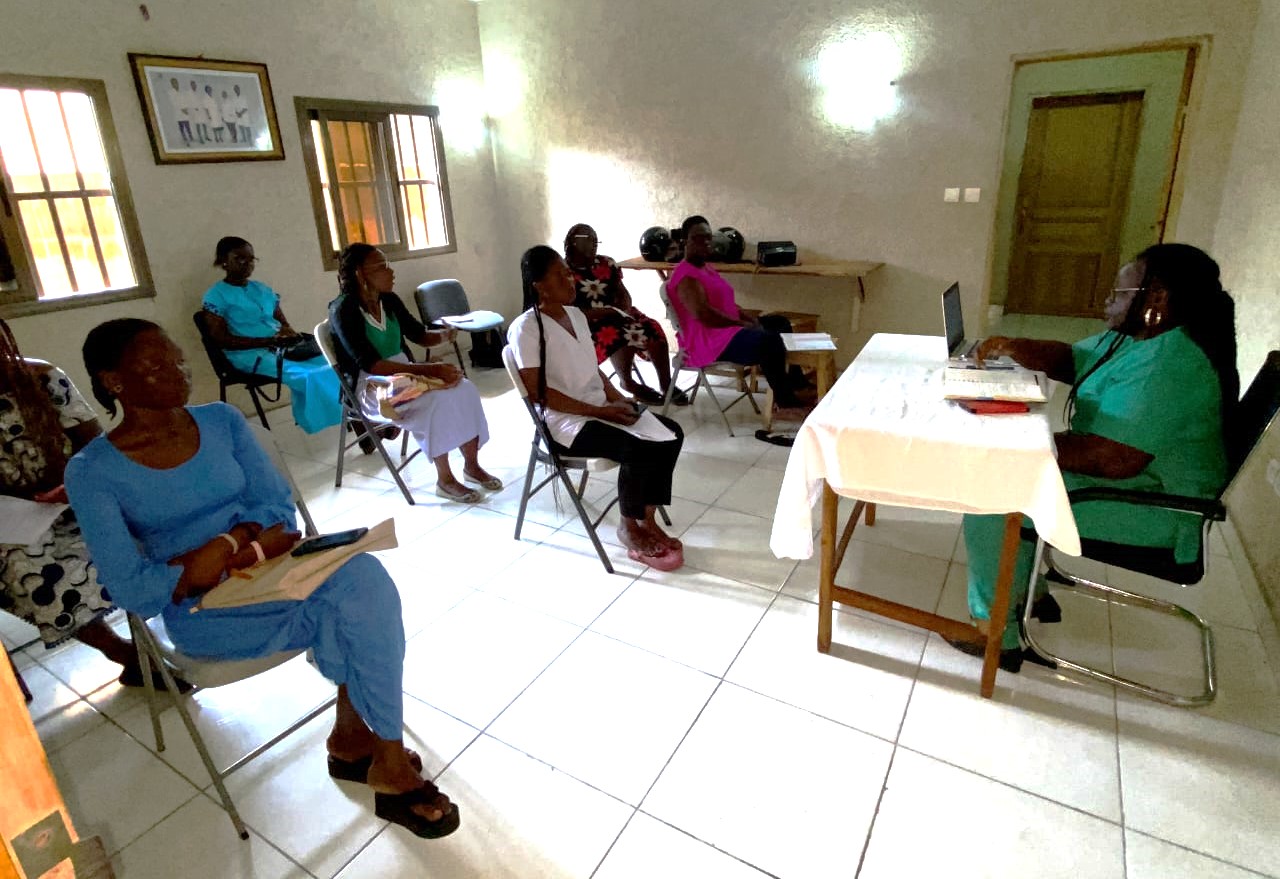
Extract from the article: On October 31, a dozen assistants for students with disabilities (AESH) from private schools in Greater Lomé took part in a training session on the theme: “Eliminating or reducing challenging behaviors in schools.” Organized by the Efanam-Lo firm, th
On
October 31, a dozen assistants for students with disabilities (AESH) from
private schools in Greater Lomé took part in a training session on the theme:
“Eliminating or reducing challenging behaviors in schools.” Organized by the
Efanam-Lo firm, this session aimed to provide participants with practical tools
to prevent, reduce, and manage problematic behaviors in children with autism
and learning disabilities in schools.
Given
the growing diversity of educational needs in schools, training for teaching assistants
for students with disabilities (AESH) is becoming a key issue for inclusive
education. These professionals, who work directly with autistic children, play
an essential role in regulating and understanding problematic behaviors. Autism
is a neurodevelopmental disorder characterized by difficulties in social
interaction and communication, repetitive behaviors, and restricted interests,
among other things.
These
professionals, who work directly with autistic children, play an essential role
in regulating and understanding problematic behaviors. Autism is a
neurodevelopmental disorder characterized by difficulties in social interaction
and communication, repetitive behaviors, and restricted interests, among other
things.
During
the training, participants discovered various strategies for creating a more
peaceful learning environment: establishing visual routines to reassure
students, reinforcing positive behaviors, and using appropriate aids (images,
gestures, pictograms) to communicate more effectively. They learned about the
principles of Applied Behavior Analysis (ABA). This scientific approach studies
how human behavior is influenced by the environment and how to change it in a
positive way. Case studies also enabled AESH staff to learn how to observe,
interpret, and adapt their educational approach.
The
trainer, Ms. Adiel Lotri, a mental health occupational therapist, pointed out
that autistic children regularly exhibit problematic behaviors such as
screaming, self-harm, refusal to participate, and isolating themselves under
their desks, which prevent new learning from taking place. "What is often
referred to as ‘problematic behavior’ is very often a form of communication. An
autistic student who screams or becomes agitated is not necessarily trying to
cause trouble; they are expressing a need or frustration. So providing them
with an inclusive education is not just about welcoming them into the
classroom, it's about guaranteeing them an environment where they can learn,
grow, and be understood. Therefore, assistants must be trained to better
support students with disabilities," she explained.
The
trainer emphasized the importance of patience, compassionate communication, and
positive encouragement. She also discussed collaboration between different
educational stakeholders: teachers, parents, school psychologists, educators,
and caregivers. This multidisciplinary approach makes it possible to develop
individualized support plans that promote consistency in practices and
continuity in support, she said.
The
training was praised by Ms. Essénam Laboé, AESH at Cours Lumière (Lomé):
"I feel more at ease. I understand better why a student reacts in a
certain way and, above all, how to help them without losing control. Understanding and kindness must become our
teaching tools."
Training
assistants in managing challenging behaviors is an investment in a more humane,
fair, and inclusive school.
William O.