
SRHR/FP funding: REMAPSEN warns of consequences in Togo
- Posted on 12/12/2025 19:21
- Film
- By kolaniyendoumiesther@gmail.com
Extract from the article: The Togolese branch of the African Media Network for Health and Environment Promotion (REMAPSEN) brought together media professionals on Friday, December 13, 2025, in Lomé. The meeting, themed “Funding cuts: what are the concrete effects on ....
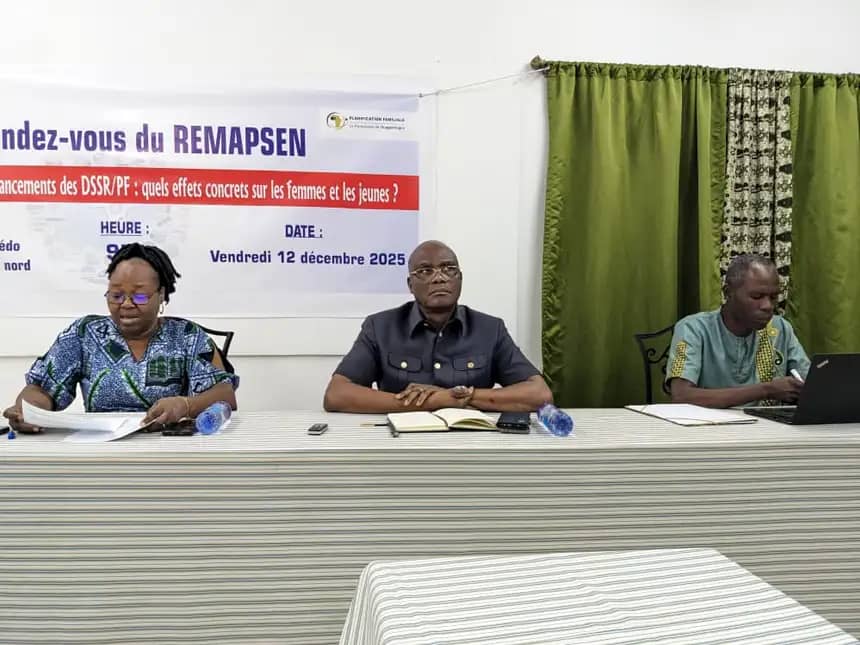
The Togolese branch of the African Media Network for Health and Environment Promotion (REMAPSEN) brought together media professionals on Friday, December 13, 2025, in Lomé. The meeting, themed “Funding cuts: what are the concrete effects on women and young people?”, aimed to examine the concrete consequences of funding cuts for sexual and reproductive health and rights (SRHR) on women and young people.
This
day of discussion and exchange is part of the REMAPSEN Rendez-vous initiative.
“It anticipates the major annual meeting of the Ouagadougou Partnership
scheduled for December 16-18 in Lomé on this issue of funding,” said Peace
Ambroisie, REMAPSEN coordinator.
Current
situation and national mobilization
The
government recently supported the purchase of contraceptive products to the
tune of 150 million CFA francs and set up a program to teach values and sexual
health in schools. According to Dr. Abram Ametepe, representative of the
Ministry of Health, "Togo has gradually increased its national
contribution since 2012, now covering more than 20% of input needs. With
external funding becoming increasingly unpredictable, the country must develop
its own health sovereignty to ensure the continuity of services."
REMAPSEN
campaigns for local authorities to finance these actions. Its advocacy aims to
ensure that municipalities include budget lines to support health facilities
and NGOs in the field. Currently, dependence on funding for family planning
(FP) stands at 82%. The aim is to reduce this external dependence.
The
impact of lack of funding on women and young people
The
reduction in funding has had concrete and dramatic effects on health
indicators. Apoté Akpe, expert and Secretary General of the Network of
Champions for Adequate Health Financing, outlined the risks, explaining that
the decline in funding increases unwanted pregnancies and the number of
clandestine abortions. These phenomena directly threaten women's lives. “Togo
aims to achieve less than 110 maternal deaths per 100,000 live births by 2030.
The reduction in funding could jeopardize this goal. Currently, there are 302
maternal deaths per 100,000 live births,” he said.
Young
people are particularly affected because unmet FP needs reach 48.8%. The lack
of funds hinders the work of peer educators, slows down awareness-raising, and
limits access to services.
Esther KOLANI