
Genomic surveillance: Lomé trains a new generation of African experts
- Posted on 09/09/2026 17:58
- Film
- By raymonddzakpata@sante-education.tg
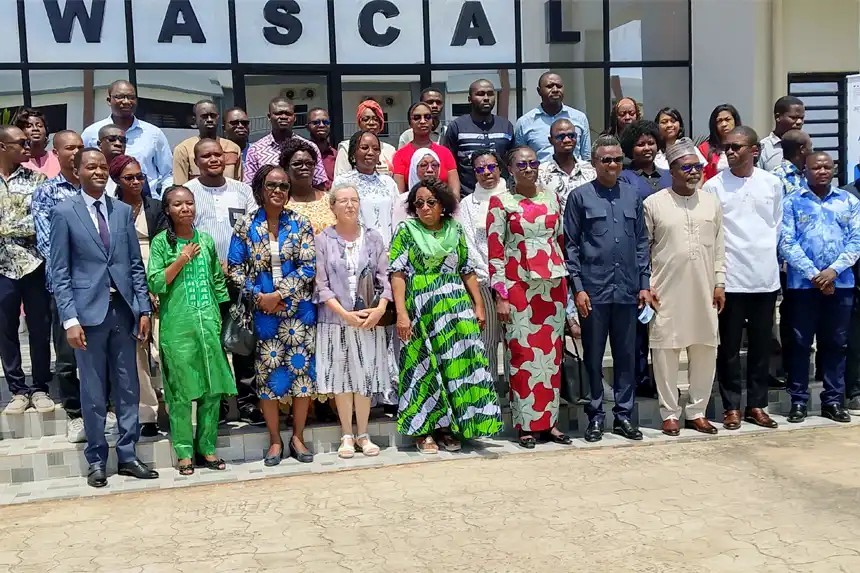
Extract from the article: In the face of the persistent threat of epidemics, the University of Lomé has been hosting a 14-day training course on genomic surveillance and the ‘One Health’ approach since 9 September 2026 in Lomé. The AFROSCREEN FEF initiative brings together...
In
the face of the persistent threat of epidemics, the University of Lomé has been
hosting a 14-day training course on genomic surveillance and the ‘One Health’
approach since 9 September 2026 in Lomé. The AFROSCREEN FEF initiative brings
together experts and healthcare professionals from ten African countries with a
shared objective: to strengthen the continent’s capacity to anticipate and
respond more effectively to health emergencies. Several experts, including
doctors, biologists, vets, pharmacists, researchers and other health
specialists, are taking part in this session.
The
AFROSCREEN network was established in the context of the Covid-19 crisis to
help address Africa’s shortcomings in genomic surveillance. This technology
enables, in particular, the identification and characterisation of variants of
infectious agents from biological samples.
The
training is based on three main modules. The first is devoted to the ‘One
Health’ approach, which recognises the close links between human health, animal
health and the environment. Participants are invited to compare their
experiences and the mechanisms put in place in their respective countries. The
aim is to promote mutual learning and collaboration between national systems.
The
second module focuses on risk modelling. Using data collected in the
laboratory, modelling tools enable us to go beyond the analysis of individual
cases to better assess the risks to which entire populations may be exposed and
to guide preventive measures.
Finally,
the third module, which lasts one week, is devoted to genomics and
bioinformatics. These disciplines enable the analysis of sequencing data to
better identify the pathogens responsible for diseases and understand their
evolution.
Training
‘AFROSCREEN ambassadors’
Beyond
the acquisition of technical knowledge, AFROSCREEN FEF aims to create a network
of professionals capable of passing on these skills in their respective
countries.
Participants
are thus called upon to become true ‘AFROSCREEN ambassadors’, both within their
laboratories and at a national level. They will be able to help bring together
stakeholders in human, animal and environmental health and foster new
scientific collaborations.
This
cooperation is all the more important given that infectious agents know no
borders. For the organisers, the sharing of skills, data and experiences is
therefore a key lever for improving the continent’s preparedness for future
epidemics.
Towards
African health sovereignty
Financially
supported by the French Development Agency (AFD) and a scientific consortium
comprising, in particular, ANRS MIE, IRD and the Pasteur Institute, the
original AFROSCREEN project helped to inform public health decision-making in
several African countries over a four-year period.
With
AFROSCREEN FEF, supported by the Équipe France Fund, this momentum continues.
In Lomé, the challenge extends beyond the two-week training course: the aim is
to build a sustainable African network of expertise capable of anticipating
health threats and creating a more resilient Africa in the face of future
epidemics.