
International Congress of Epidemiology and Public Health: Results and Recommendations/Interview of Prof. Didier Koumavi Ekouevi, President of the Organising Committee
- Posted on 24/03/2023 14:37
- Film
- By abelozih@sante-education.tg

Extract from the article: From 15 to 16 March 2023, Lomé hosted an international congress on epidemiology and public health under the theme "public health in the face of emerging and re-emerging diseases". This high-level meeting promoted exchanges between epidemiologists and
« The first lesson learned from this conference... is that we are at the root of our pandemics... the discussions provided evidence that will enable people to adopt better health behaviour.... »
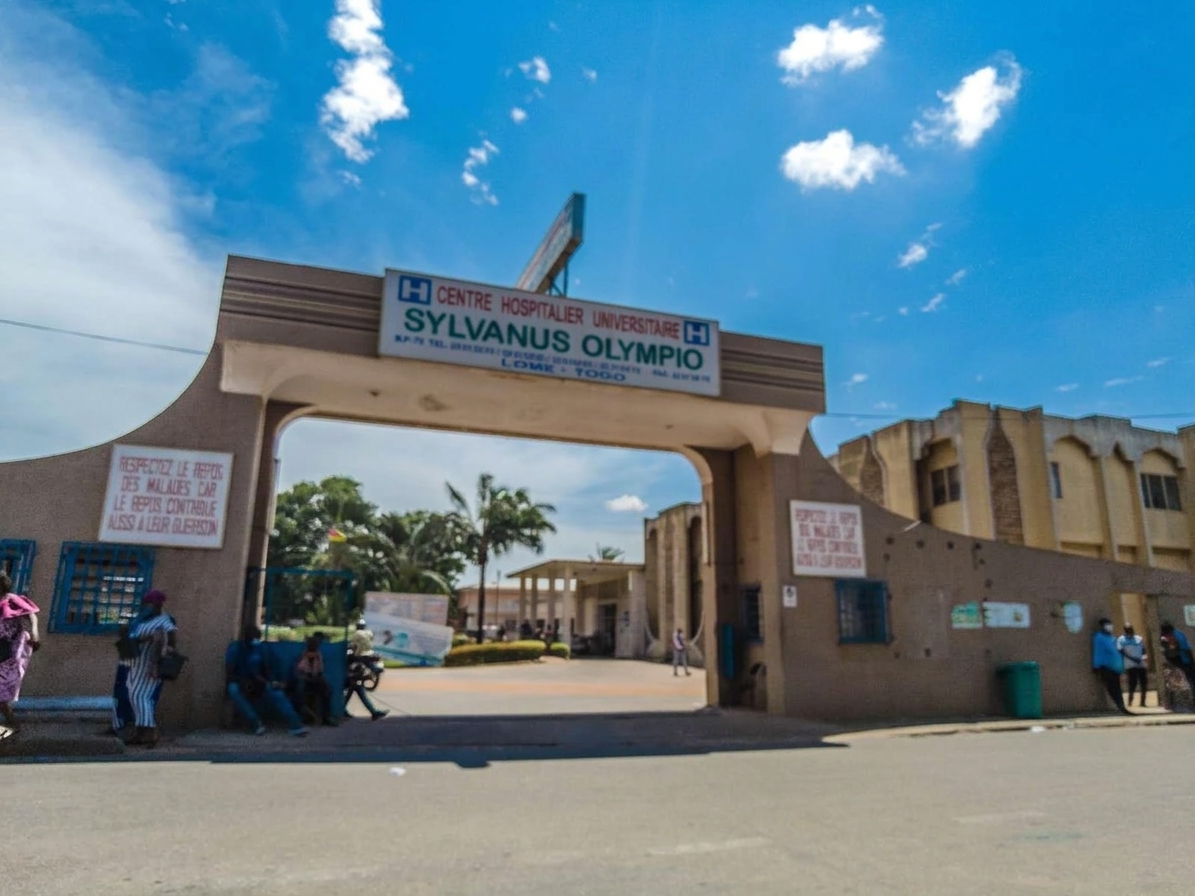
From 15 to 16 March 2023, Lomé hosted an international congress on epidemiology and public health under the theme "public health in the face of emerging and re-emerging diseases". This high-level meeting promoted exchanges between epidemiologists and public health actors, to share their professional experiences, to contribute to the development of public health research and training in epidemiology. Were the objectives of the congress achieved? What are the results and lessons learned? What are the recommendations made to governments? Prof. Didier ekouevI, President of the Organising Committee answers in this interview.
Santé-Education:
Were the objectives assigned to the congress achieved?
Prof.
Didier Ekouevi: Globally, the objectives assigned to the
congress were achieved. We succeeded in bringing together nearly 300
researchers from 21 countries around the world. These researchers were able to
exchange on various themes and discuss approaches to solutions to major health
issues in the world in general and in sub-Saharan Africa in particular. This
conference also allowed us to strengthen South-South and North-South
partnerships in order to better finance research in our countries. We had very
good discussions with public health actors from other West African universities
and from Europe. New partnerships will be signed between the University of Lomé
and other universities in the field of public health training and research. We
had very fruitful exchanges with the National Agency for Research on AIDS,
Viral Hepatitis and Emerging Infectious Diseases, whose director came to attend
this conference. The discussions focused on equitable partnership and participation
in innovative research projects. Furthermore, the holding of this conference in
Lomé enabled our country to show leadership in research and the organisation of
large-scale scientific events. We have thus succeeded in making Lomé the
capital of epidemiology and public health for a few days. The pre-conference
that took place at the University of Lomé was also a success with more than 215
participants who were trained in medical writing and biostatistics.
What
is the value of the papers presented at the Congress?
During
this 2-day congress, it is almost impossible to present all the papers. We have
therefore made a choice. The plenary lectures were given by invited experts. We
had six in total and the oral presentations were selected from the 300 received.
In other words, only 10% of the papers received were presented orally. The rest
were posters or poster presentations, which allow each researcher to present
their research work during defined periods. This is an increasingly popular
form of communication at scientific conferences. It also allows for direct
discussion with the researchers, regardless of the time limit (10 minutes) for
an oral presentation. A total of 199 poster presentations were accepted, mainly
on Covid-19, other emerging diseases and epidemiological surveillance,
tuberculosis, HIV and malaria, mother and child health and non-communicable
diseases. These presentations provided an opportunity to discuss the progress
of research in these different areas in order to provide the scientific
community with up-to-date information on the fight against these diseases. In
addition, researchers were able to share their experiences in order to
capitalise on similar research projects and achieve better results. Finally,
the discussions provided evidence that will enable people to adopt better
health behaviours but also serve policy makers in making decisions to improve
the health of the population.
What
are the results and lessons learned from the Congress?
The
first lesson learned from this congress on emerging diseases is, as Serge
Laurent said: « We are at the origin of the manufacture of our pandemics ».
In other words, human behaviour impacts our health and encourages the
development of new diseases. Secondly, climate change, which is now a major
public health issue, is also the fault of human beings through the excessive
use of fossil fuels, rampant urbanisation and deforestation.
Antibiotic
resistance, defined as the ineffectiveness of antibiotics, will be responsible
for more than several million deaths (it will kill more than cancer by 2030)
and is mainly due to self-medication, excessive consumption of drugs even in
the case of viral diseases, and the sale of counterfeit or street drugs.
We
also learned that the re-emergence of malaria and antimicrobial resistance is
due to inappropriate behaviour by humans themselves. Finally, non-communicable
diseases are on the rise due to the demographic, health and nutritional
transition. Obesity among adolescents and young people is a major concern with
psychological and health implications.
What
are the recommendations to governments?
The
recommendations from this congress are addressed to researchers, technical and
financial partners and governments. To summarise, we can say that it is a
question of developing structuring and innovative research projects, if
possible multidisciplinary, seeking innovative financing for research,
strengthening health systems through two fundamental axes: universal health
coverage and equity in health, strengthening public-private partnerships in
research and strengthening the health system. It is also necessary to equip our
countries with research centres, training on the « One Heath »
concept and clinical research as a whole.
When
is the next Congress?
The
next congress will take place from 10 to 12 July 2024 in Limoges, France.
Interview
by Abel OZIH