
Clean hands to avoid illness
- Posted on 23/10/2024 15:21
- Film
- By abelozih@sante-education.tg
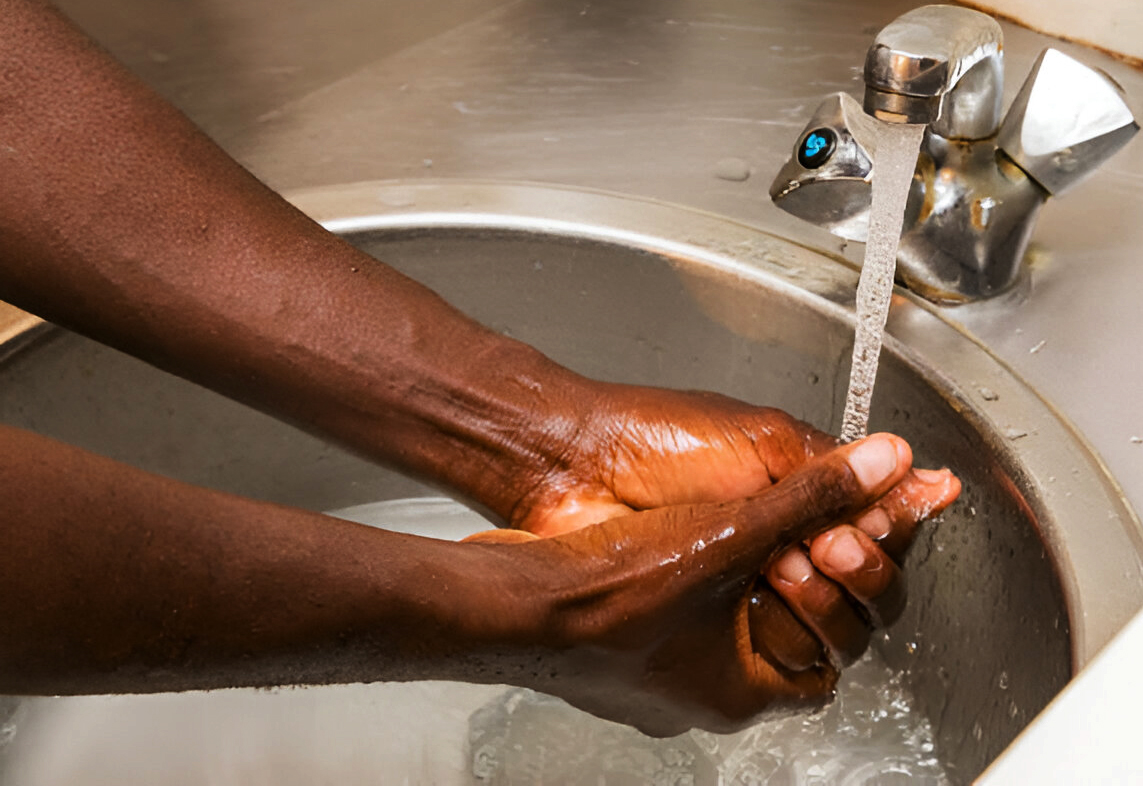
Extract from the article: Chaque 15 octobre, le monde entier célèbre la Journée mondiale du lavage des mains. Un geste quotidien qui a pourtant des conséquences majeures sur la santé. Les mains, vecteurs de milliers de germes, sont responsables de la propagation de nombreuses
Every 15 October, the whole world celebrates Global
Handwashing Day. It's an
everyday gesture, but one that has a major impact on our health. Hands
carry thousands of germs, and are responsible for the spread of many
infections. That's why, this year, 2024, the theme of the day is
more relevant than ever: «Why is it always
important to have clean hands? »
It's usually because of germs on their hands that
children catch illnesses such as colds, gastroenteritis and flu. Regular hand
washing with soap and water can reduce diarrhoeal infections by 40% and
respiratory infections by 21%. Statistics from the World Health Organisation
(WHO) speak for themselves: 80% of infections are transmitted by the hands. In
sub-Saharan Africa, only 15% to 25% of people wash their hands exclusively with
soap.
To mark Global Handwashing Day, the African Water and Sanitation Association (AAEA) has issued a reminder of the crucial importance of this simple gesture for public health. Under the theme «Why is hand washing important», the AAEA highlighted the considerable benefits of this practice in preventing disease and protecting communities, particularly in Africa.
Moreover, washing hands with soap can halve the risk
of diarrhoea in toddlers under 5. Worldwide, diarrhoea remains the second
leading cause of death in children under 5. It causes 600,000 child deaths
every year, and in more than 1.7 billion cases, diarrhoeal diseases are also
associated with a higher risk of stunting (underweight for age and delayed
development) and represent an enormous burden for society. Yet handwashing with
soap is one of the simplest and least expensive barriers to infection.
The AAEA's Executive Director, Olivier Gosso, stressed
that handwashing with soap and water remains an essential preventive measure,
despite its simplistic appearance. «In Africa, where
access to drinking water and sanitation is still limited in some regions,
hand-washing could significantly reduce the number of cases of diarrhoeal and
respiratory diseases», he said. Faced with these
alarming figures, the AAEA is taking concrete action on the ground to improve
access to drinking water and hand-washing facilities, particularly in rural
areas where infrastructure is often deficient.
Moreover, washing hands with soap can halve the risk
of diarrhoea in toddlers under 5.Worldwide, diarrhoea remains the second
leading cause of death in children under 5.It causes 600,000 child deaths every
year, and in more than 1.7 billion cases, diarrhoeal diseases are also
associated with a higher risk of stunting (underweight for age and delayed
development) and represent an enormous burden for society.
Whether at home, at work, at school or in public
places, washing hands before eating or after defecation considerably reduces
the spread of diarrhoeal diseases and has a major impact on the health and
well-being of children and communities. This simple gesture is within
everyone's reach and can save lives.
Elom AKAKPO & Esther KOLANI (Intern)