
RAPO Closing 2025: increase budget lines for family planning
- Posted on 20/12/2025 18:40
- Film
- By raymonddzakpata@sante-education.tg
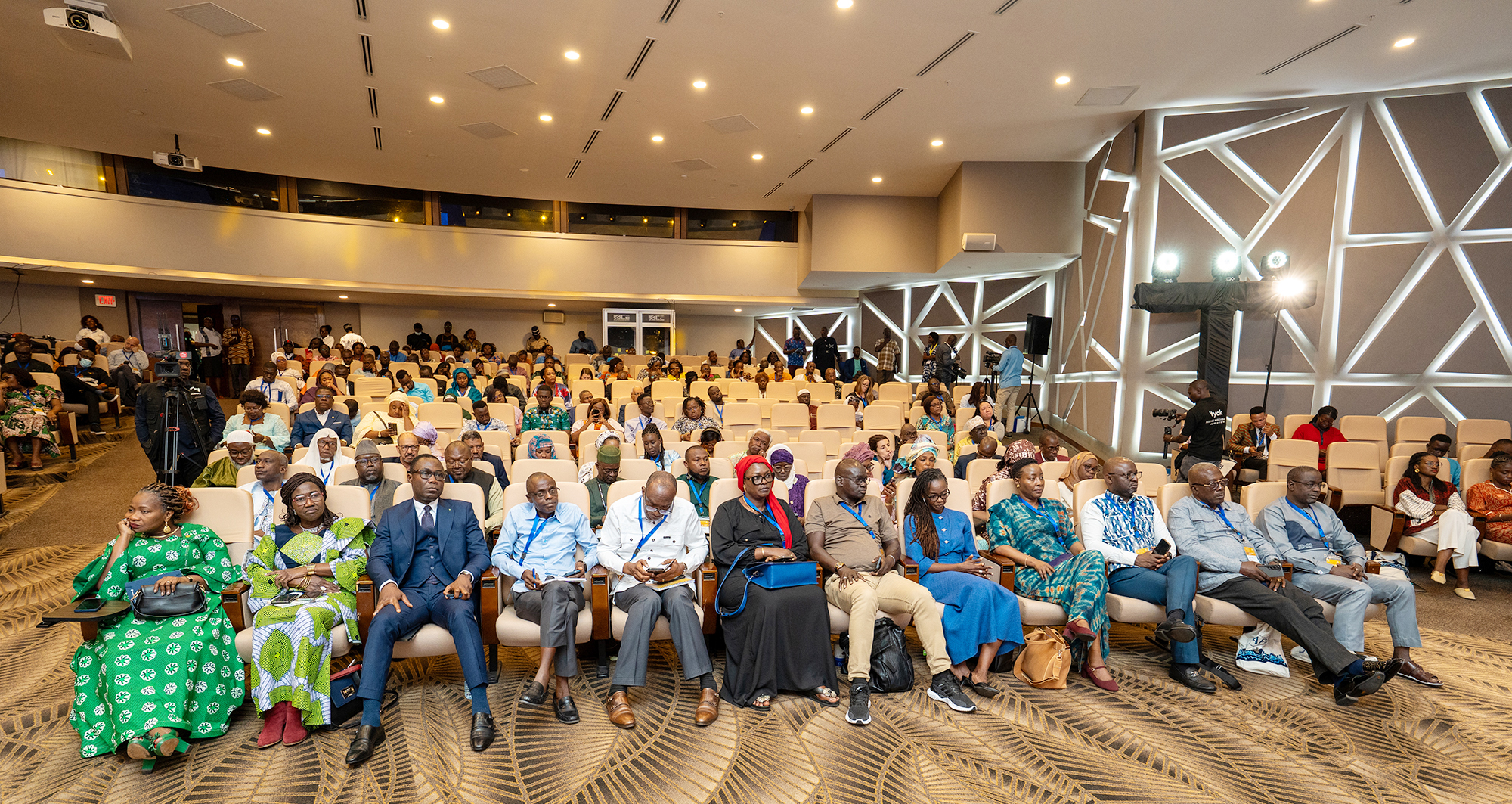
Extract from the article: The sober but highly symbolic closing ceremony was marked by recognitions, strong recommendations and clear calls for collective action. It was chaired by Dr. Wotobé Kokou, Secretary-General of the Ministry of Health.
The
sober but highly symbolic closing ceremony was marked by recognitions, strong
recommendations and clear calls for collective action. It was chaired by Dr.
Wotobé Kokou, Secretary-General of the Ministry of Health.
The
discussions made it possible to identify concrete levers, notably the securing
of national budget lines, the integration of DSSR into universal health
coverage, the increased involvement of local authorities, the mobilization of
the private sector and strengthening accountability.
Recommendations from the 2025 RAPO
The synthesis of the work of the RAPO 2025 highlighted a series of strong recommendations, called to mark a decisive turning point towards genuine health sovereignty for the countries of the Ouagadougou Partnership. The participants unanimously stressed the need to create and sustainably increase budget lines dedicated to family planning at the national level, in order to reduce dependence on external funding. This dynamic must be accompanied by an expansion of funding sources, increasing the participation of the private sector, local authorities and actors outside the health sector, in a logic of shared responsibilities and financial sustainability.
The session also recommended the adoption of financial innovations, including mechanisms such as impact bonds and other tools adapted to national contexts, capable of mobilizing new resources and attracting sustainable investments. To support these reforms, high-level advocacy must be conducted in each country to strengthen political and social mobilization around rights and sexual and reproductive health. Strengthening accountability mechanisms has been identified as a key lever to improve transparency, efficiency of public spending and increased domestic resource mobilization.
Furthermore,
the RAPO 2025 insisted on the importance of consolidating the positioning of
the DSSR in national priorities, while improving performance in budget
execution, so that commitments are translated into concrete and equitable
services for the populations. Participants also recognized youth as a major
demographic asset, calling for the strengthening of existing mechanisms to
better meet their specific needs. Finally, the continuous integration of
minority needs into SRHR policies and programmes, as well as their effective
participation in decision-making processes, was reaffirmed as an indispensable
condition to leave no one behind and ensure sustainable and inclusive progress
The voice of young people and religious
communities
In
her speech, Ms. Dorcas Essilvi, PO/FP2030 Youth Focal Point for Togo, recalled
that the sustainability of commitments inevitably requires a real involvement
of young people, not only as beneficiaries, but as actors of change. She
stressed the need for inclusive funding mechanisms, sensitive to the needs of
adolescents and young people, especially girls.
For
his part, Prof Bouraima Boukari, President of the Association of Religious
Confessions of Togo in Health and Development, emphasized the strategic role of
religious leaders in the promotion of sexual and reproductive health. He
advocated for a permanent dialogue between decision-makers, communities and
religious denominations to overcome socio-cultural resistance and promote
sustainable community ownership of family planning programs.
A clear course for the future
At
the end of the work of RAPO 2025, Lomé establishes itself as a space of truth,
political courage and shared responsibility. More than an annual meeting, this
edition will have laid the foundation for a new phase of the Ouagadougou
Partnership, one where commitments are measured in terms of resources
mobilized, results achieved and real impact on the lives of women, girls and
communities. The RAPO 2025 is closing, but the process of health sovereignty
has only just begun.
For
Marie Ba, Director of the Ouagadougou Partnership Coordination Unit, praised
the collective courage of the participants in facing current challenges.
"In a context of shrinking international funding, we have chosen not to
give into discouragement, but to open a lucid and ambitious debate on the
future of SRHR funding in our countries," she said.
According
to the Director of UCPO, the message from Lomé is unequivocal. "The
sustainability of our progress will require strengthened national ownership and
a resolute acceleration of domestic financing. Reproductive health is not a
luxury but a pillar of development, gender equality and the stability of our
societies," she said.
For
Dr. Wotobé Kokou, Secretary-General representing the Minister of Health, Public
Hygiene, Universal Health Coverage and Insurance, emphasized the strategic
scope of the exchanges held in Lomé. "The panels highlighted a shared
conviction. Health sovereignty begins with an endogenous, strong and assumed
financial commitment." , he emphasized.
Some
countries not members of the Ouagadougou Partnership (Madagascar, Nigeria,
Zimbabwe, Burundi), participated in this RAPO 2025.
Raymond DZAKPATA