
Autism in children: warning signs
- Posted on 19/04/2023 16:25
- Film
- By abelozih@sante-education.tg
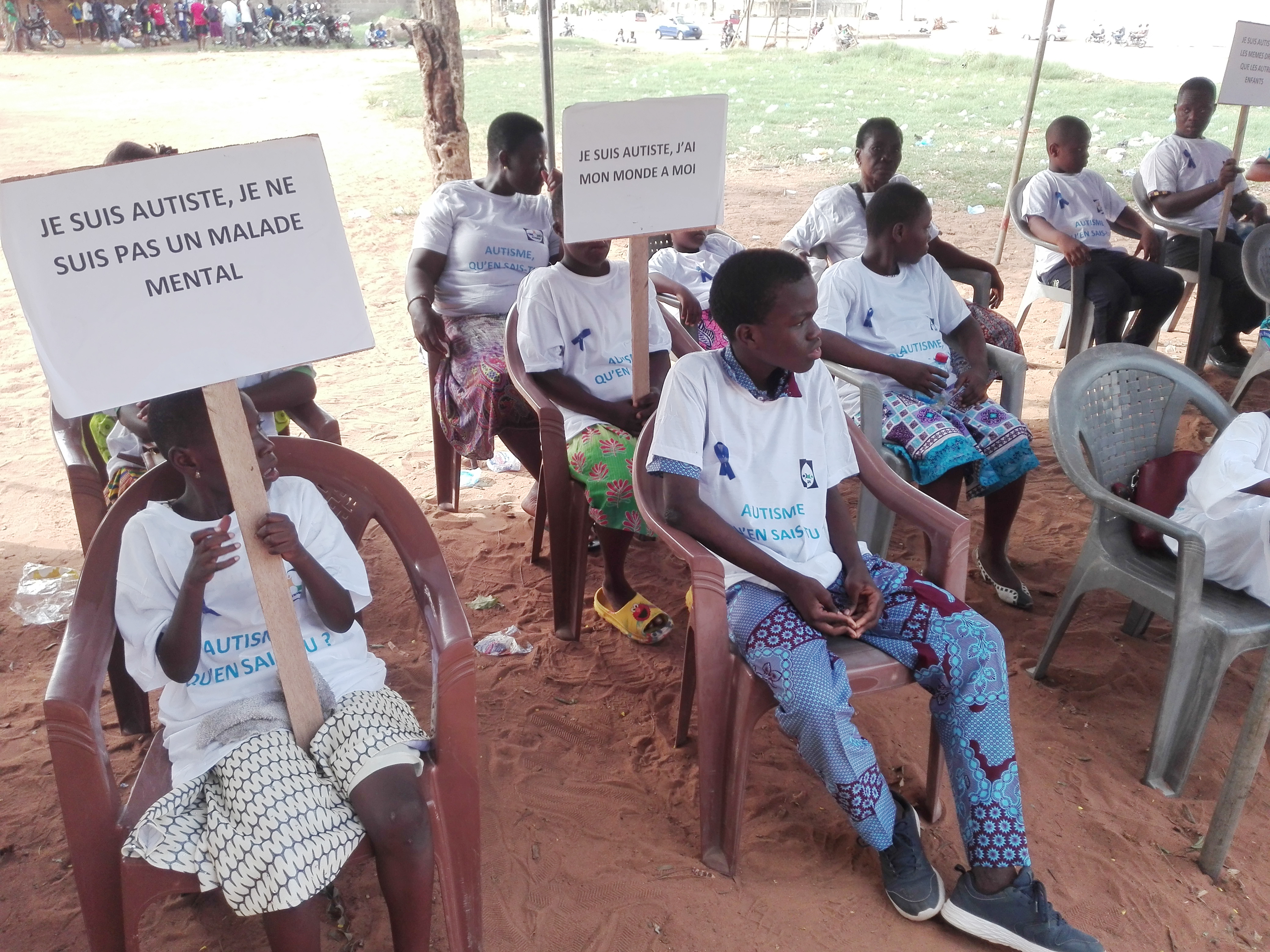
Extract from the article: It is crucial to describe the signs of autism in children in order to understand this condition. According to the diagnostic criteria outlined by Ms Adiel Lotri, an occupational therapist specialising in mental health and a graduate of Claude Bernard
Autism in children: warning signs
It
is crucial to describe the signs of autism in children in order to understand
this condition. According to the diagnostic criteria outlined by Ms Adiel
Lotri, an occupational therapist specialising in mental health and a graduate
of Claude Bernard University in Lyon (France), given the absence of additional
tests to establish a diagnosis, such as blood tests or imaging, we must rely on
signs and symptoms.
According
to the World Health Organisation, 1 in 160 children worldwide has autism
spectrum disorder (ASD). In Lomé, according to the Association Togo Merveilles
et Mystères (ATMM), approximately 2,000 children are currently living with
autism spectrum disorders, according to current estimates. This
neurodevelopmental disorder, which mainly affects boys (four times more than
girls), causes difficulties in communication, social relationships and
behaviour.
What is autism?
Autism
spectrum disorder (ASD) is "a group of developmental disorders that share
some common characteristics. The causes of these disorders are not known with
certainty. Genetic and environmental problems have been associated with some
cases, but research is ongoing to better identify the causes," explains
Ms. Adiel Lotri, a mental health occupational therapist. Today, it is also not
possible to say with certainty that any particular factor is the cause, she
says.
Interviewed
during an awareness session conducted by the association Autisme Togo merveille
et mystère (ATMM) on 6 April 2024, Dr Rissikatou Salifou Ouro-Sama, clinical
psychologist at the Saint-Jean-de-Dieu health centre in Agoè, Lomé, adds:
"Autism is a neurodevelopmental disorder, which means that the brain
develops differently in the foetus, resulting in signs that appear very early
in the child, the first of which are detectable from 9 months of age (e.g. lack
of response to smiling). It is a developmental disorder characterised by
abnormal or deficient development. Autism is not a disease. Genetic and
environmental factors are often at the root of it."
How does this disability manifest
itself in children?
Ms
Adiel Lotri explains that autism affects three areas: social behaviour,
restricted interests and communication. ‘The symptoms of autism in children
appear before the age of 3. It is therefore essentially a developmental
disorder. Autism affects various aspects of a person's daily life and even
those around them. Autism spectrum disorders cannot be diagnosed through
laboratory tests,’ she emphasises.
Difficult communication
Children
with autism spectrum disorder have communication problems. ‘They have
difficulty interacting with those around them. We therefore distinguish between
verbal and non-verbal autistic people. Some autistic people acquire spoken
language, while the second group makes a few sounds of their own,’ explains Ms
Lotri.
During
an awareness-raising session led by the Togolese Association for the Education
and Integration of People with Intellectual Disabilities (ATEIPDI), in
collaboration with the ‘Lumière’ centre on 2 April 2023 at the Lycée Moderne 2
in Adidogomé, Ms Jémila, mother of an autistic child, gave a ‘fascinating’
testimony: "When we learned that our son was autistic, our whole world
fell apart. The most difficult thing was the lack of communication. I would
have given anything for him to simply say “mummy” or look me in the eye. He
would sometimes scream for no apparent reason, and I didn't know if he was
hungry, in pain or afraid. But thanks to therapy, we learned to communicate in
other ways: with gestures, images and pictograms."
Psychologist
Dr Bêkeyi Agathe Sogoyou, an expert in supporting pupils with learning
difficulties/intellectual disabilities and/or ASD, points out that facial
expressions are also characteristic, tending to be neutral and without much
accompanying body language. ‘This makes it difficult for parents to interpret
how they are feeling. Some children know their first name perfectly well, but
do not respond when called. Sometimes, adults think this is related to a
hearing problem and consult an ENT specialist.’
Other
times, children get into the habit of constantly repeating a word or the end of
a sentence they have just heard, even if they have received a satisfactory
answer or obtained the desired object, notes Ms Lotri. ‘In reality, they don't
do this to get a response, but because it is part of their repetitive
behaviour,’ says the occupational therapist.
Lack of social interaction
The
main symptom of autism spectrum disorders is a lack of social interaction.
Specialist Adiel Lotri shows that children with autism seem disconnected from
the reality around them and are not interested in their environment or only
interested in a single object.
In
addition, their gaze is quite ‘characteristic’. One of the symptoms of autism
is "not sharing one's attention with another person on the same object or
situation, in addition to looking away to the sides in situations that would
involve direct contact. Some of these children do not appreciate gestures of
affection, such as hugs. They reject these displays of closeness, even with
violent gestures if they deem it necessary," says the occupational
therapist.
Children
with autism spectrum disorders play alone. ‘It is very difficult for them to
establish play routines with other children. In addition, their personal play
is repetitive, always in the same way and always with the same toys that they
chose at the beginning,’ says Ms Essénam Laboé, assistant for children with disabilities
(AESH) at Cours Lumière (Lomé).
Abnormal behaviour
The
behaviour of autistic children seems strange to those around them. "They
engage in activities that others would not do and assign functions to things
that are outside the conventional norm. The toys they choose have a different
function, and they may play with only one part of the toy without using the
whole thing. Of course, their play is repetitive and monotonous,"
reiterates Ms. Essénam Laboé, AESH.
Rocking
is another sign found in some autistic children. "Children rock back and
forth, on the spot, sometimes for hours. This behaviour may be accompanied by a
vacant stare, always in the same direction. On the other hand, changes in
routines are a real problem," explains Ms Lotri.
Furthermore, according to Dr Bêkeyi Agathe
Sogoyou, the life of an autistic child is organised around rituals and
repetitions that turn into crises at the slightest change. The child may even
have violent outbursts.
Be alert to the signs
If
parents are alert to the symptoms of autism and healthcare professionals are
able to guide the diagnosis, it will be easier to begin treatment. In addition,
Dr Koffi Yaboué, president of the Togolese Association for the Inclusive
Education of People with Intellectual Disabilities (ATEIPDI), recommends that
teachers be given the tools to identify suspected cases for possible early
intervention. "Teachers must be attentive to children's behaviour and draw
parents' attention to suspected cases, encouraging them to consult specialists
for a diagnosis. We believe that it is at school level that these children can
be detected early. The important message is to accept difference and say no to
the stigmatisation of these autistic children,‘ he emphasised during an
awareness-raising session for teachers at the Sagbado Public Primary School
(EPP) on 2 April 2025, on the theme: ’I am autistic and I also have the right
to education. No to stigmatisation and discrimination."
The
earlier the signs of autism are recognised, the better the child can be
supported. Every autistic child can learn, progress, communicate and integrate
if they are given support. The most important thing is to create an
understanding, inclusive, patient and caring environment, both at home and at
school.
William O.