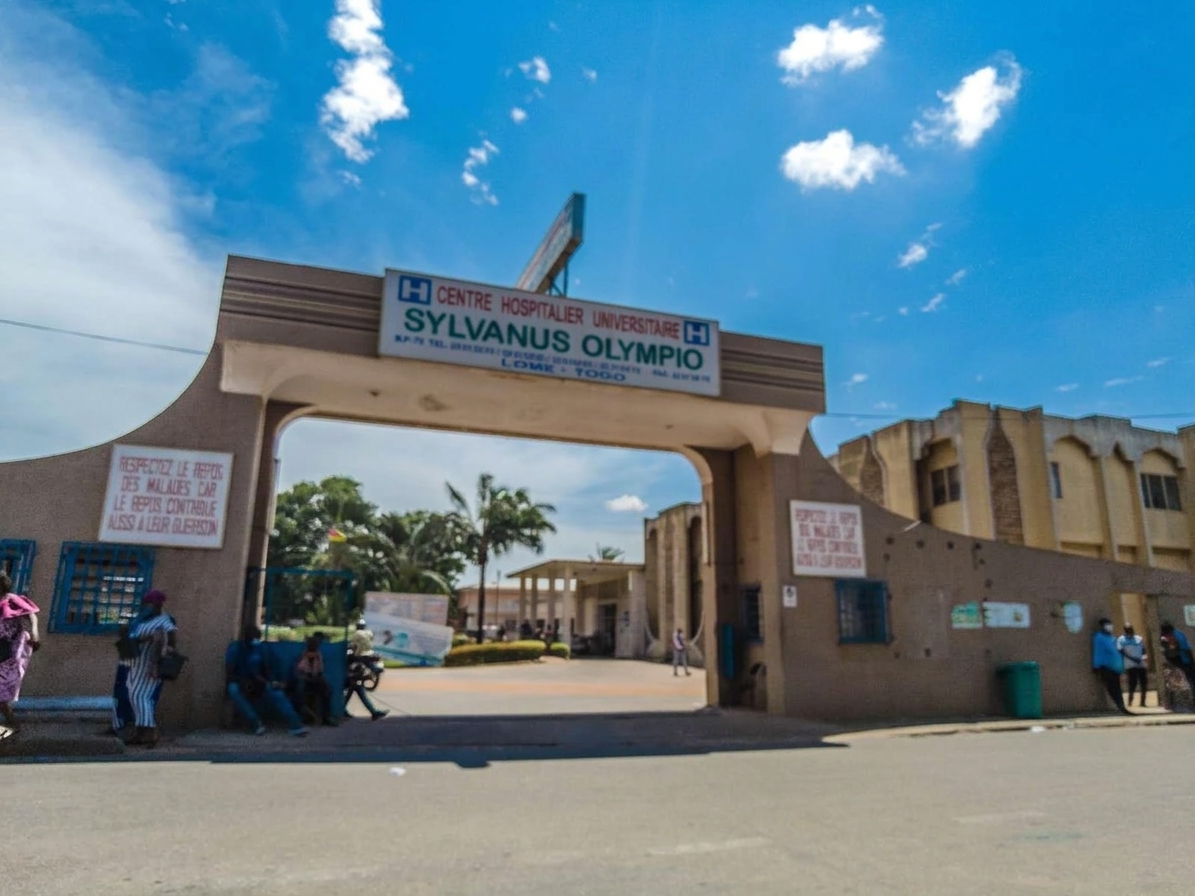

Interview with Mrs Awate Abide, President of the Association of Managers and Administrators of Health Services in Togo (AGASSTO)
- Posted on 18/03/2025 16:57
- Film
- By abelozih@sante-education.tg
.jpeg
"santé éducation")
Extract from the article: On 22 November 2024, the Association des Gestionnaires et Administrateurs des Services de Santé du Togo (AGASSTO) held its elective and statutory general meeting. The event provided an opportunity to assess the progress made in the management and adm
‘To
date, most of these laws and regulations are not only obsolete, but also not
applied in full. This means that a vast reform programme needs to be
launched...’.
On
22 November 2024, the Association des Gestionnaires et Administrateurs des
Services de Santé du Togo (AGASSTO) held its elective and statutory general
meeting. The event provided an opportunity to assess the progress made in the
management and administration of health services, while identifying the
challenges ahead. In this interview, Mrs Awate Abidé, President of AGASSTO,
explains the role of health service managers and hospital administrators in
this new dynamic of improving access to care for all, and analyses the current
situation of the health system, particularly in terms of the legislative and
regulatory texts and the organisation of the services of the Ministry of
Health.
Santé Education: What is a
health services manager and administrator?
Ms Awate Abidé: It's
a person with a degree in health services management or hospital administration
whose job is to organise, plan, direct, coordinate and evaluate the activities
of the various services and departments including hospitals.
How many are there in Togo
today?And how many are currently in post?
We
can estimate the number at 150 trained health service managers and
administrators, of whom around 100 are currently in post. However, the new
executive committee has launched a census of all health service administrators
and managers of Togolese nationality, which is currently underway.
Why did you set up
AGASSTO?
AGASSTO
was created at the General Assembly of 24 November 2006 by the transformation
of the parent association, AHOTO (Association des Administrateurs des Hôpitaux
du Togo).This was done with the aim of integrating Health Service Managers
newly trained at the Ecole Nationale d'Administration (ENA), as AHOTO only
brought together Hospital Administrators.
AGASSTO
was set up to promote the profession of health service managers and
administrators, defend the interests of its members and serve the public good.
Its
aim is to create synergy between all health service managers and administrators
in Togo, to defend the moral and socio-professional interests of its members
and to help improve the quality of care provided in hospitals and health
services.
What activities has AGASSTO
already carried out?
Several
activities have been launched, including: a census of all Togolese health
service managers and hospital administrators; the appointment of focal points
in the six economic regions; the organisation of capacity-building sessions for
its members (after work every last Thursday of the month); assistance to
members in the event of illness or unfortunate events.
Do you organise
capacity-building sessions for members?
Yes.
In its action plan, AGASSTO has devoted axis 3 to capacity-building activities
for its members, promoting professional commitment and excellence through
sessions called ‘after-work’ that it organises once every last Thursday of the
month online.The sessions cover practical and professional topics, personal
development, ethics and best practice.
In
addition to these after-work sessions, the office plans to organise a
face-to-face capacity-building session once a year.
It
also plans to sign partnership contracts with similar associations or networks
in the sub-region to facilitate exchanges of experience.
What do you think is the
current state of health service management?
The
health system has one particularity.It is run by multidisciplinary players.
We
have several bodies: the medical and paramedical bodies on the one hand, and
the administrative, technical and support bodies on the other. Not only does
each player have his or her own part to play, but all the bodies complement
each other to achieve effective and efficient results.
To
date, most of the laws and regulations governing the organisation and operation
of health services and departments are not only obsolete, but also not applied
in full. This means that a vast reform programme needs to be launched to take
account of the realities on the ground.We are delighted to see that this is
what the current Minister for Health has begun, with a number of innovative
initiatives that we warmly welcome.These include: the drafting and validation
of the guide for drawing up the Hospital Establishment Project (PEH); the decree
regulating the dress of staff in public, private and religious health
facilities; the drafting of public and private health standards currently
underway; and the decree setting up, tasking and composition of the committee
to combat the proliferation of private health facilities.
Furthermore,
if we refer to decree n°0021/2013/MS/CAB/SG on the organisation of the services
of the Ministry of Health, we can see that to date, many posts have remained
vacant, yet qualified and competent human resources are idle in certain
structures or departments.The same applies to certain positions of
responsibility in certain hospital structures.This would undoubtedly weaken the
health system as a whole.
And what can we say about
management staff who have retired but are still in post, even though they no
longer have any challenges to face and are focusing on their physical and
mental well-being?
Everything
needs to be seriously rethought!
What contribution can
AGASSTO make to the implementation of the universal health insurance programme?
Under
Axis 4, AGASSTO's action plan includes raising awareness in the media or
through short educational capsules, on the themes of respect for the health
pyramid according to pathology ....
What are AGASSTO's main
challenges?
Like
any association, AGASSTO faces a number of challenges, including: mobilising
internal and external financial resources to fund the association's activities;
strengthening the cohesion of members to ensure unity of action; raising the
profile of the association's activities; practising respect for the public
good, ethics and deontology, a culture of commitment and professional
excellence; enhancing the image of health service managers and administrators by
having a positive impact on those around us through a culture of work well
done.
Our outlook
To increase its visibility, AGASSTO plans to design its logo and website. It plans to build its headquarters. It plans to organise scientific days bringing together all hospital administrators and health service managers in the West African sub-region.
Words of advocacy for
decision-makers?
A
series of pleas were submitted to the Minister of Health and Public Hygiene,
with whom we had a lengthy discussion on the various points raised. We would
like to thank him for his openness. We hope that our concerns will be taken
into account.
Interview by Game KOKO