
4th African Dermatology Conference: Africa focuses on expertise and innovation
- Posted on 16/09/2026 11:13
- Film
- By raymonddzakpata@sante-education.tg
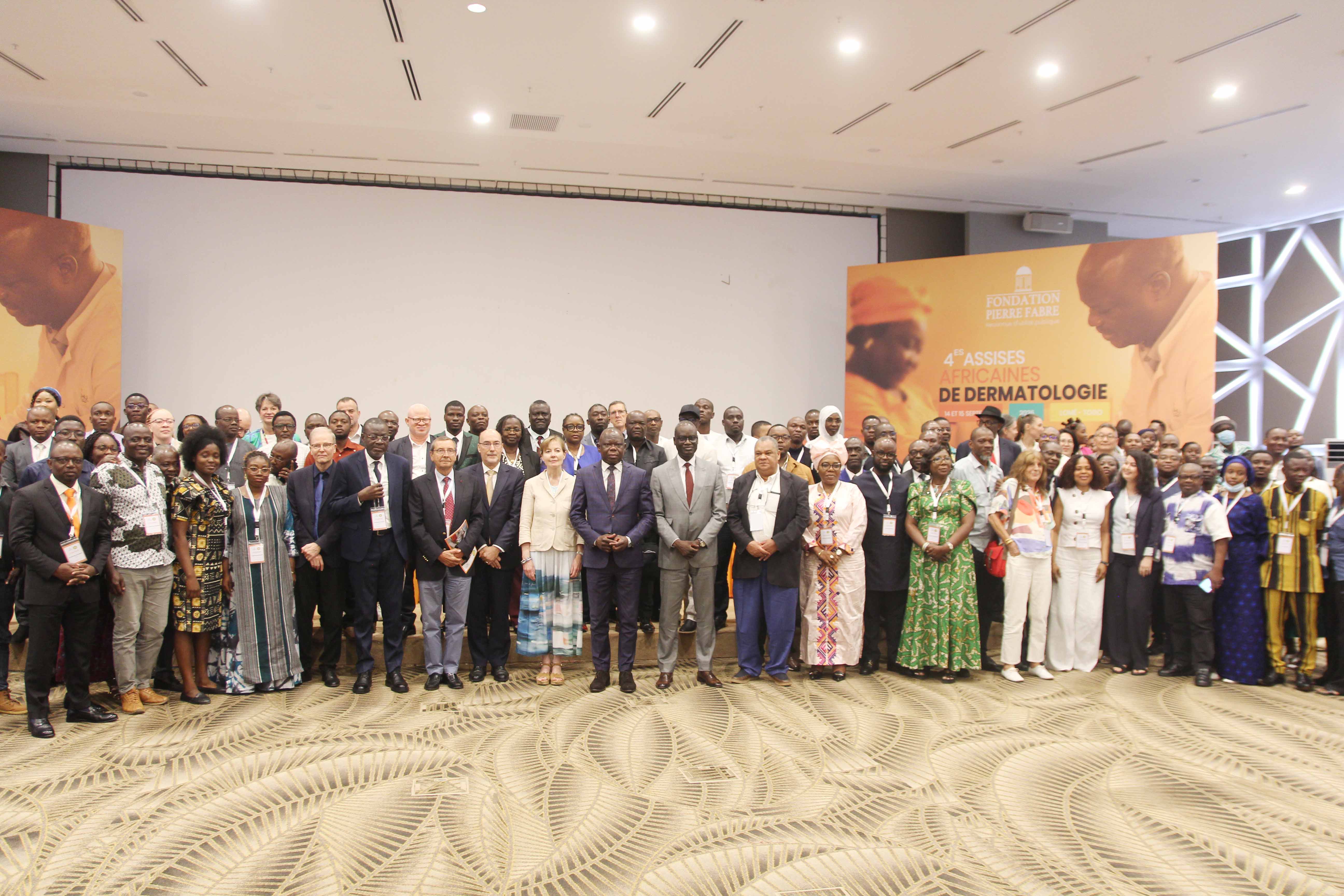
Extract from the article: The 4th African Dermatology Conference will take place on 14 and 15 September 2026 in Lomé. Organised by the Pierre Fabre Foundation, in collaboration with the Togolese Society of Dermatology and Sexually Transmitted Infections (SOTODERM), the co....
The
4th African Dermatology Conference will take place on 14 and 15 September 2026
in Lomé. Organised by the Pierre Fabre Foundation, in collaboration with the
Togolese Society of Dermatology and Sexually Transmitted Infections (SOTODERM),
the conference will bring together dermatologists, GPs, researchers, public
health professionals and partners to discuss issues relating to skin health in
Africa.
Following
on from Bamako in 2017, Lomé in 2019 and Abidjan in 2022, this fourth edition
aims to strengthen the sharing of experiences, professional training and
research, whilst promoting solutions tailored to African realities.
For
the Pierre Fabre Foundation, which has been committed for several years to
improving access to healthcare and high-quality medicines in the Global South,
this conference goes beyond a mere scientific gathering. “We wish to foster
skills development, facilitate the sharing of experiences and bring together
the various stakeholders, so that together we can develop responses tailored to
the needs of the African continent,” emphasised Professor Serge Resnikoff,
trustee and chair of the Pierre Fabre Foundation’s Scientific Committee.
A public health issue
The
recognition of skin diseases as a public health issue, notably through World
Health Organisation (WHO) Resolution WHA78.15, lends particular significance to
this meeting.
For
Jean-Marie Tessi, Togo’s Minister of Health, this recognition must now be
reflected in practice. “There can be no
truly universal coverage if certain conditions, certain populations or certain
regions remain excluded from access to quality care,” he stated.
Dermatology
is not, in fact, solely about physical health. “A skin condition can cause pain, exclusion, stigmatisation and profound
psychological distress,” the minister pointed out, emphasising that
treating the skin also means restoring patients’ confidence and dignity.
Faced
with the burden of skin diseases in sub-Saharan Africa and the shortage of
specialists, participants called for better integration of dermatological care
into primary healthcare, the strengthening of healthcare staff’s skills and
more equitable access to specialist expertise.
The challenge of a shortage of
dermatologists
In Togo, the shortage of specialists remains particularly acute. The country has 24 dermatologists for a population of around eight million, which equates to approximately one dermatologist for every 400,000 people. The majority are concentrated in Lomé: 17 dermatologists practise there, compared with two in Tsévié, four in Kara and one in Dapaong.
For
Dr Raymond Barruet, acting president of SOTODERM, this situation justifies the
development of solutions to bring specialist expertise closer to the
population. Since 2018, SOTODERM has therefore been supported by the Pierre
Fabre Foundation for a teledermatology project covering the whole country, with
the exception of the Lomé-Commune region where specialist care is already
available. Over the past eight years, the project has trained 202 healthcare
workers in the management of common skin conditions, provided expert advice on
4,395 cases referred via the Bogou teledermatology platform, and managed 52,599
cases of common skin conditions at teledermatology sites.
The partnership also focuses on the
care of people with albinism. Between 2019 and 2023, seven mobile consultation
campaigns enabled 1,362 people with albinism to be seen. The current caseload
stands at 135 people.
Telemedicine, artificial intelligence
and training
The
conference places great emphasis on technological innovations, particularly
telemedicine and artificial intelligence. These tools could help to improve
diagnostic support, early detection and patient referral, particularly in areas
far from specialists.
“Distance must no longer condemn a patient to
a diagnostic odyssey or delay their treatment,” emphasised the Minister for
Health.
The
programme also includes lectures, round-table discussions and practical
workshops focusing on dermatopathology, dermatological surgery, dermoscopy and
clinical research. For Professor Emmanuel Armand Kouotou, President of the
Francophone African Dermatology Society (SODAF), this conference provides an
important forum for information, continuing medical education and the sharing
of experiences. It will also provide an opportunity to take stock of
teledermatology initiatives carried out in Mali, Mauritania and Togo, amongst
other places.
Raymond DZAKPATA